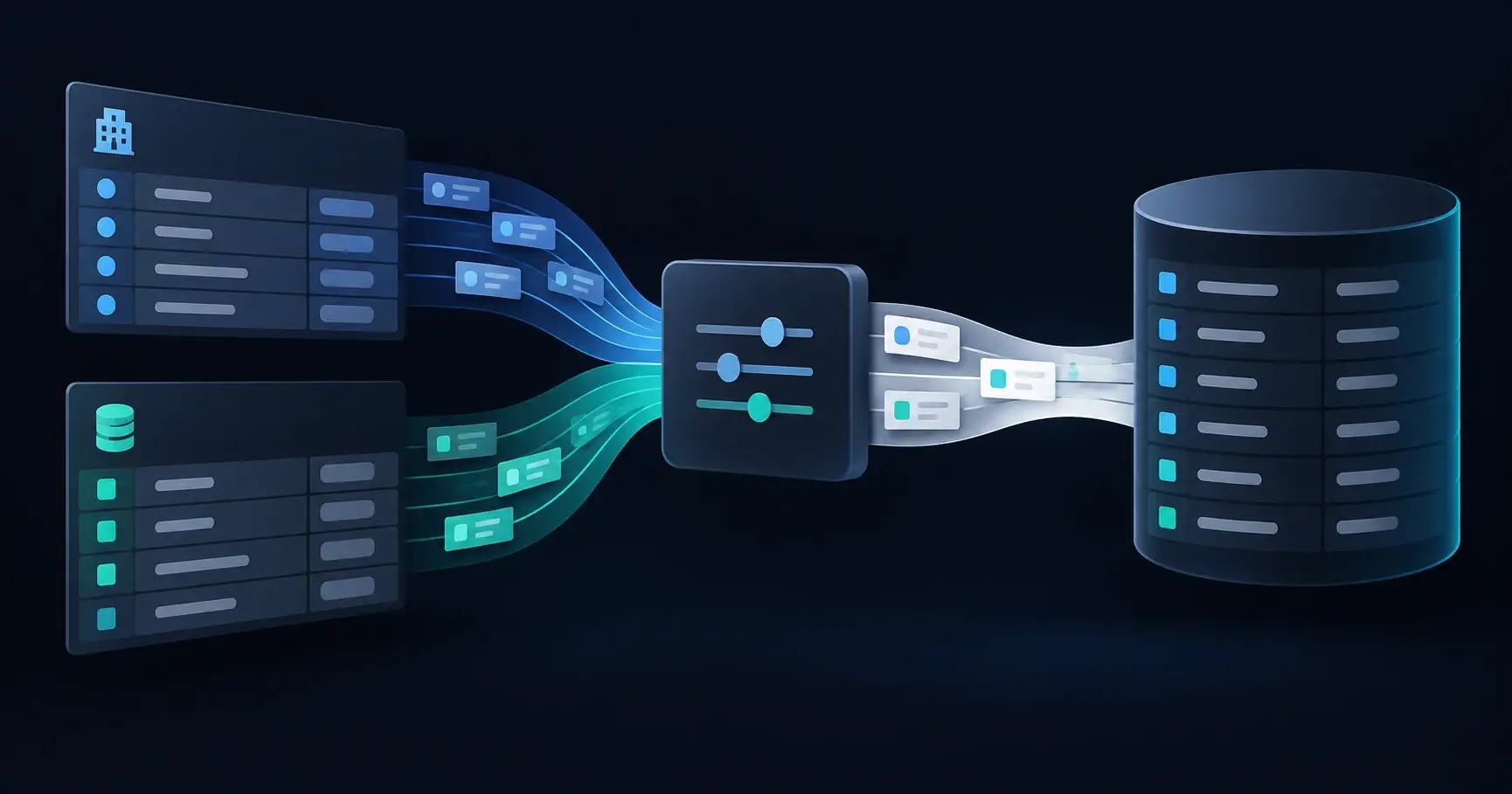
A RAG pipeline is the data and retrieval architecture that lets an AI system answer from approved knowledge. For enterprise AI integration, the pipeline needs to do more than push documents into a vector database. It must preserve context, permissions, freshness, citations, and operational control.
The difference between a demo and a production RAG system is the quality of the pipeline. A demo can ingest a folder and answer a few sample questions. A production system has to keep working as documents change, users ask messy questions, permissions shift, and leadership expects trustworthy answers.
The Core RAG Pipeline
- Ingestion: collect content from document repositories, databases, APIs, file systems, and knowledge bases.
- Extraction: convert files into clean text while preserving tables, headings, metadata, and source relationships where possible.
- Chunking: divide content into useful retrieval units without losing context.
- Embedding: generate vector representations that make semantic search possible.
- Indexing: store vectors, source text, metadata, permissions, and source links.
- Retrieval: match user questions to the most relevant approved source material.
- Generation: produce answers from retrieved context with citations and task-specific instructions.
Enterprise Requirements That Change the Design
Enterprise RAG system development introduces constraints that are easy to miss in early pilots. Users may have different access rights. Some documents may be stale or superseded. Source systems may use inconsistent metadata. Some answers may require citations. Some workflows may require human review before the answer is used.
The architecture should include permission-aware retrieval, source freshness checks, metadata normalization, logging, evaluation, and clear rules for what happens when the system is uncertain.
RAG, LLM Orchestration, and Governance
The retrieval layer should not operate alone. LLM orchestration determines which model receives the retrieved context, how the prompt is assembled, what tools can be used, and whether the output requires review. Governance determines which users, models, data sources, and workflows are approved.
Knowledge Spaces combines these concerns into a governed middleware layer for enterprise and government AI. Review the Knowledge Spaces white paper for a deeper view of the control-layer pattern.
Government and Contractor Use Cases
- Solicitation and proposal knowledge bases for capture teams.
- Policy and procedure assistants for program offices.
- Compliance and audit-support workflows for government contractors.
- Contract, travel, and finance knowledge retrieval tied to approved sources.
- Mission-support knowledge systems where citation and access control matter.
What to Measure Before Launch
- Retrieval precision and recall against known-answer questions.
- Citation accuracy and source traceability.
- Permission enforcement by user role and source system.
- Latency, cost, and model routing performance.
- User feedback patterns and escalation rates.
Sprinklenet builds RAG pipelines as part of broader AI integration services, combining retrieval architecture, LLM orchestration, governance, and implementation support.
2026 Implementation Note
The strongest enterprise RAG programs now treat retrieval quality as an operational metric, not a one-time build task. Teams should review failed searches, low-confidence answers, stale citations, and permission-filter misses the same way they review uptime or support tickets.
Production Design Choices That Matter
RAG architecture gets significantly better when the design team makes a few decisions explicitly instead of leaving them to defaults.
- Chunking strategy: preserve headings, tables, source hierarchy, and business context instead of splitting documents into arbitrary blocks.
- Metadata model: track source, owner, effective date, document type, permission scope, and review status so retrieval can be filtered and audited.
- Hybrid retrieval: combine semantic search with keyword, metadata, and reranking when exact terms, clause numbers, or identifiers matter.
- Evaluation loop: maintain a known-answer set and test retrieval precision, citation quality, refusal behavior, and latency before expanding use.
RAG Pipeline Readiness Checklist
- Are users authenticated before retrieval happens?
- Can the system prove which source passages supported an answer?
- Can stale or superseded documents be excluded automatically?
- Can administrators see failed queries and improve the knowledge base?
- Can model routing, prompt changes, and retrieval configuration be reviewed together?
Related Reading
For the broader architecture decision, read RAG vs. fine-tuning vs. prompting.
Reference Architecture in Practice
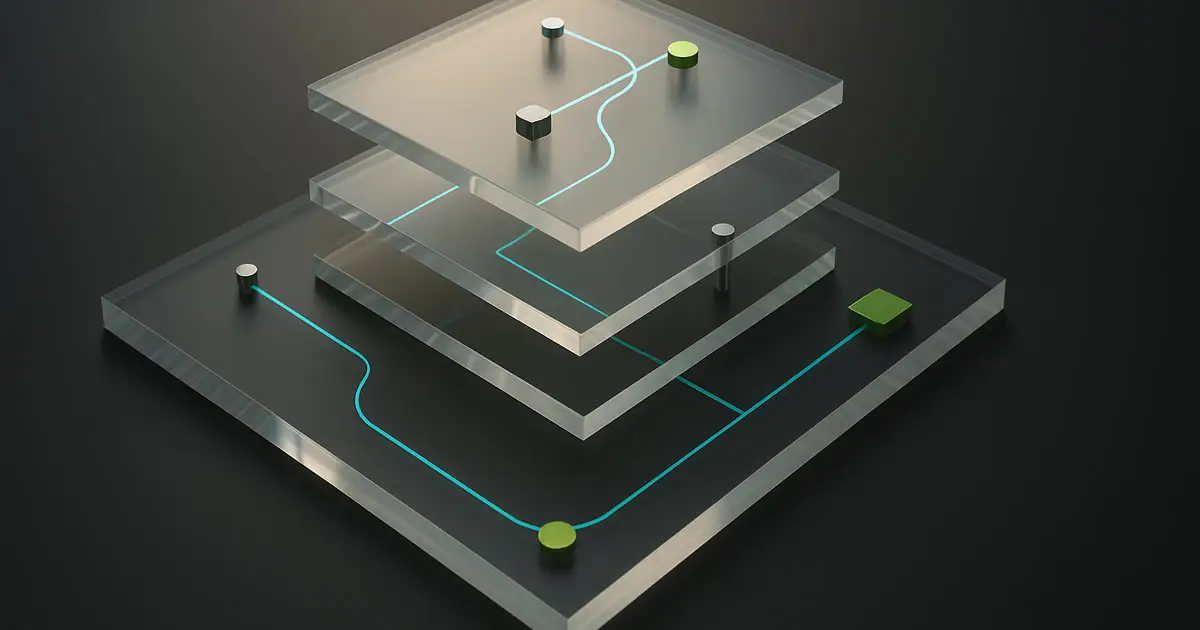
A useful enterprise RAG reference architecture has five layers that should be owned and measured separately. The first layer is the source system layer: SharePoint, Google Drive, S3, relational databases, records systems, API-backed applications, and controlled file repositories. The second layer is the ingestion and normalization layer, where files are parsed, tables are preserved, metadata is standardized, and low-quality source material is flagged before it pollutes the index.
The third layer is retrieval: embeddings, metadata filters, hybrid search, reranking, freshness checks, and permission constraints. The fourth layer is generation and orchestration, where the selected model receives only the context it is allowed to use and returns an answer in the right format. The fifth layer is operations: logging, evaluation, feedback loops, administrator review, and continuous improvement.
When these layers are blurred together, teams struggle to diagnose failure. If an answer is wrong, was the source stale, the chunk too small, the metadata missing, the retriever weak, the model misrouted, or the prompt unclear? A layered architecture makes the system easier to improve without rebuilding everything.
Failure Modes to Design Against
- Confident wrong answers: retrieval returns plausible but irrelevant passages and the model answers from the wrong evidence.
- Stale-source answers: superseded policies or older templates remain available without effective-date filtering.
- Permission leakage: the vector index retrieves content the user should not be able to see.
- Untraceable summaries: answers sound useful but do not expose source passages or citations.
- Demo-only ingestion: the system works on a curated folder but fails when exposed to real repository structure.
Sprinklenet designs RAG pipelines with these failure modes in view from the start. That is what separates a useful prototype from a system that can support real enterprise and government workflows.
Michael Goldman is a Sprinklenet Research contributor focused on model evaluation, retrieval quality, prompt risk, and audit controls for enterprise AI systems.
His work examines where AI outputs fail in practice, including weak source grounding, unclear review paths, missing audit trails, and brittle integrations.