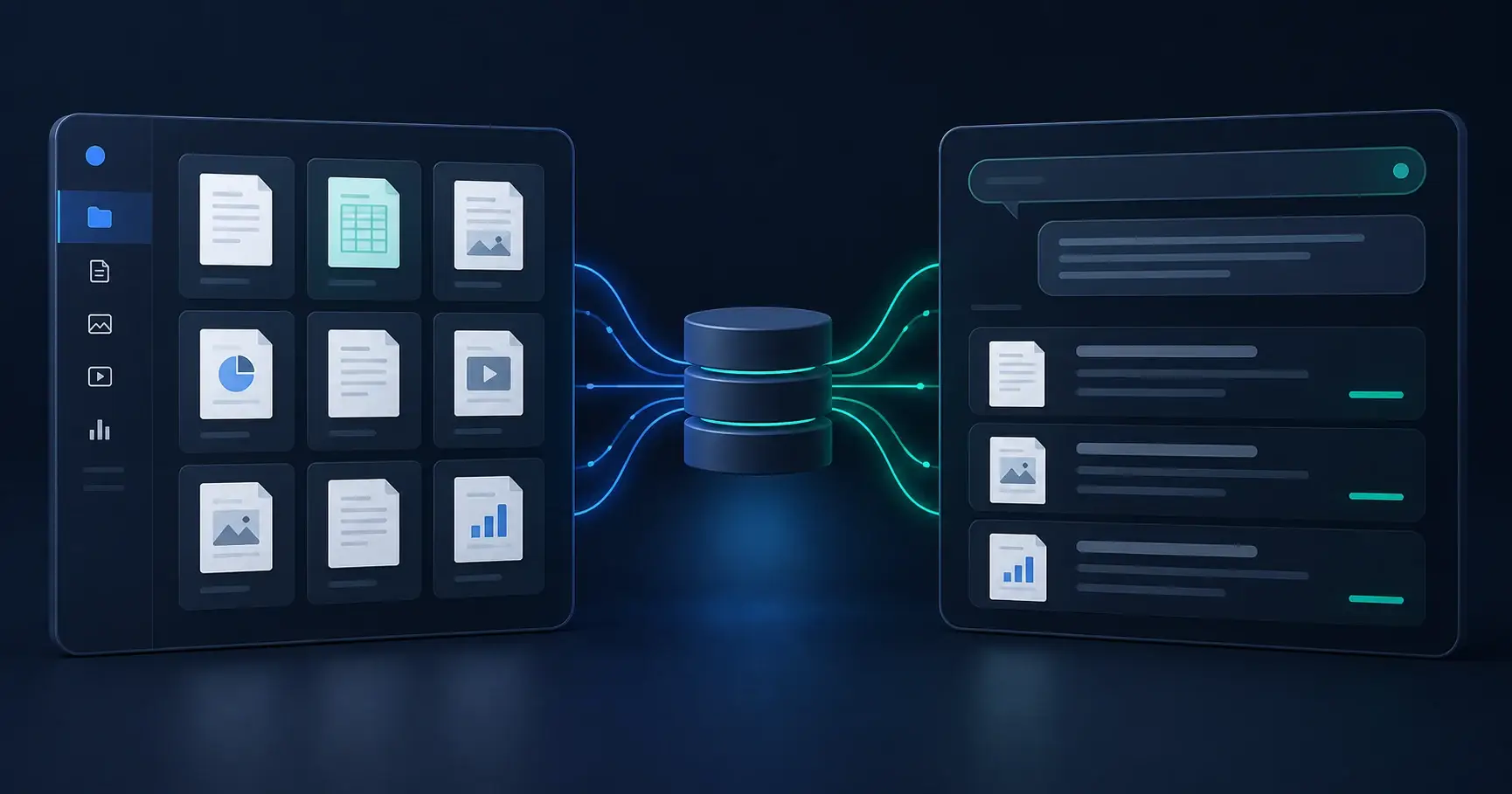
Roughly 80 percent of enterprise data is unstructured, documents, emails, reports, presentations, contracts, and correspondence that do not fit neatly into database rows and columns. This data contains enormous value: institutional knowledge, contractual obligations, regulatory requirements, customer insights, and operational intelligence. But extracting that value has traditionally required human beings to read, interpret, and manually extract the relevant information. Document intelligence is the AI discipline that automates this process, turning unstructured text into structured, searchable, actionable knowledge.
The technology has matured rapidly. What started as basic optical character recognition, converting scanned documents into searchable text, has evolved into systems that can understand document layouts, interpret tables and charts, recognize entities and relationships, classify documents by type and topic, and answer specific questions about document content with human-level accuracy.
The Document Intelligence Stack
Modern document intelligence involves multiple AI capabilities working in concert. At the foundation is document ingestion, the ability to accept documents in any format (PDF, Word, Excel, PowerPoint, scanned images, emails) and convert them into a format that AI can process. This includes OCR for scanned documents, layout analysis to understand headers, paragraphs, tables, and sidebars, and format normalization to create a consistent representation regardless of the source format.
Above the ingestion layer sits natural language understanding, the models that actually comprehend what documents say. This is where large language models and embedding models transform raw text into semantic representations that capture meaning, context, and relationships. A sentence about “the contractor shall deliver monthly progress reports by the 15th of each calendar month” gets understood not just as a string of words but as a deliverable obligation with a specific frequency and deadline.
The extraction and enrichment layer pulls structured data out of understood content. Named entity recognition identifies people, organizations, dates, monetary amounts, and domain-specific entities like contract numbers, regulation citations, or product codes. Relationship extraction maps connections, who is party to which contract, which regulation governs which activity, which deliverable depends on which milestone.
Finally, the knowledge layer organizes extracted information into a queryable structure. This is where document intelligence connects to AI knowledge management platforms, making the extracted insights searchable through natural language queries rather than requiring users to know exactly which document contains the information they need.
High-Value Use Cases
Contract analysis is one of the most immediately valuable applications of document intelligence. Organizations manage hundreds or thousands of active contracts, each containing obligations, terms, milestones, and conditions that need to be tracked and honored. Document intelligence can extract key provisions from contracts automatically, flag unusual or non-standard terms, identify conflicts between related contracts, and monitor compliance with contractual obligations on an ongoing basis.
For federal contractors working within the Federal Acquisition Regulation framework, document intelligence tools can cross-reference contract terms against regulatory requirements, ensuring that contractual obligations align with FAR provisions. This type of automated compliance checking reduces the risk of violations that could result in contract disputes, penalties, or debarment.
Policy and regulation monitoring is another high-value application. Organizations affected by regulatory changes, which is nearly all organizations, need to track updates across multiple regulatory bodies, assess the impact of changes on their operations, and update internal policies accordingly. Document intelligence can monitor regulatory feeds, identify relevant changes, compare new regulations against existing organizational policies, and flag gaps that need attention.
Knowledge base construction turns existing document repositories into searchable knowledge systems. Rather than asking employees to manually tag, categorize, and summarize documents, document intelligence does this automatically. The result is a comprehensive knowledge base that grows organically as new documents are added, without requiring constant human curation.
Accuracy and Trust
The practical value of document intelligence depends entirely on accuracy. An extraction system that correctly identifies contract terms 85 percent of the time is not useful if the remaining 15 percent includes critical obligations that are missed. Users need to trust the system’s outputs enough to act on them without manually verifying every result.
Building that trust requires transparency. The best document intelligence systems do not just extract information, they show exactly where in the source document each piece of information came from. When the system identifies a delivery deadline, users can click through to see the exact paragraph in the original contract. This traceability serves both as a quality check and as documentation for audit purposes.
Confidence scoring adds another layer of trust. Not every extraction is equally certain. A clearly stated dollar amount is high confidence. An implied obligation that requires inference is lower confidence. Surfacing these confidence levels helps users allocate their verification effort where it matters most, spending time validating uncertain extractions while trusting high-confidence results.
Integration Considerations
Document intelligence is most powerful when it feeds into downstream workflows rather than operating as a standalone tool. Extracted contract data should flow into project management systems. Identified regulatory changes should trigger review workflows. Classified documents should be automatically routed to appropriate repositories with correct access controls.
This systems integration work requires careful attention to data formats, APIs, and workflow automation tools. The document intelligence platform needs to produce outputs in formats that downstream systems can consume, with sufficient metadata to support routing, classification, and access control decisions.
For organizations with complex document ecosystems, multiple repositories, diverse formats, varying classification levels, the integration challenge is significant but manageable with the right architecture. A well-designed document intelligence pipeline can process documents from any source, normalize them into a consistent representation, extract structured data, and distribute that data to the systems that need it.
Getting Started
Begin with a specific document type and a specific extraction goal. Contracts, invoices, regulatory filings, and policy documents are common starting points because they follow relatively consistent structures and the extracted data has clear business value. Define what you want to extract, how accuracy will be measured, and how the extracted data will be used.
Process a representative sample and measure accuracy against human extraction. This baseline tells you both how well the system performs and where its weaknesses lie. Most document intelligence systems need some tuning for domain-specific document types, and the pilot phase is where that tuning happens.
The organizations getting the most value from document intelligence are those that think of it not as a point solution but as a foundational capability. When every document that enters your organization is automatically understood, indexed, and made queryable, the cumulative effect on organizational knowledge and decision-making is transformative.