
The AI industry spent the past few years in a race to build the single most capable model, the one model that could do everything from writing poetry to analyzing legal contracts to generating code. While these frontier models are genuinely impressive, organizations deploying AI in production are learning a different lesson: the best AI systems are not built on one model. They are built on many models working together, each selected for the specific task it does best.
This multi-model approach is not a compromise or a workaround. It is an architectural strategy that delivers better performance, lower costs, greater reliability, and more flexibility than any single-model approach can achieve. Understanding why, and how to implement it effectively, is becoming a core competency for organizations serious about enterprise AI.
The Limits of the One-Model Approach
The appeal of using a single large language model for everything is obvious: simplicity. One API to integrate, one set of capabilities to learn, one vendor to manage. But this simplicity comes at a cost. Large general-purpose models are expensive to run, often slower than specialized alternatives, and may not perform as well on domain-specific tasks as smaller models that have been fine-tuned for those tasks.
Consider a typical enterprise AI deployment that needs to handle document search, text summarization, question answering, classification, and entity extraction. A single large model can technically do all of these things, but it is overkill for some and may underperform on others. Using a frontier model to classify documents into ten categories is technically possible, but often inefficient.
There are also practical concerns about vendor dependency. Organizations that build their entire AI infrastructure on a single model from a single provider are exposed to that provider’s pricing changes, service disruptions, model deprecations, and policy shifts. When your AI system depends on one provider and that provider changes its terms, you have no negotiating position and no fallback.
The Multi-Model Architecture
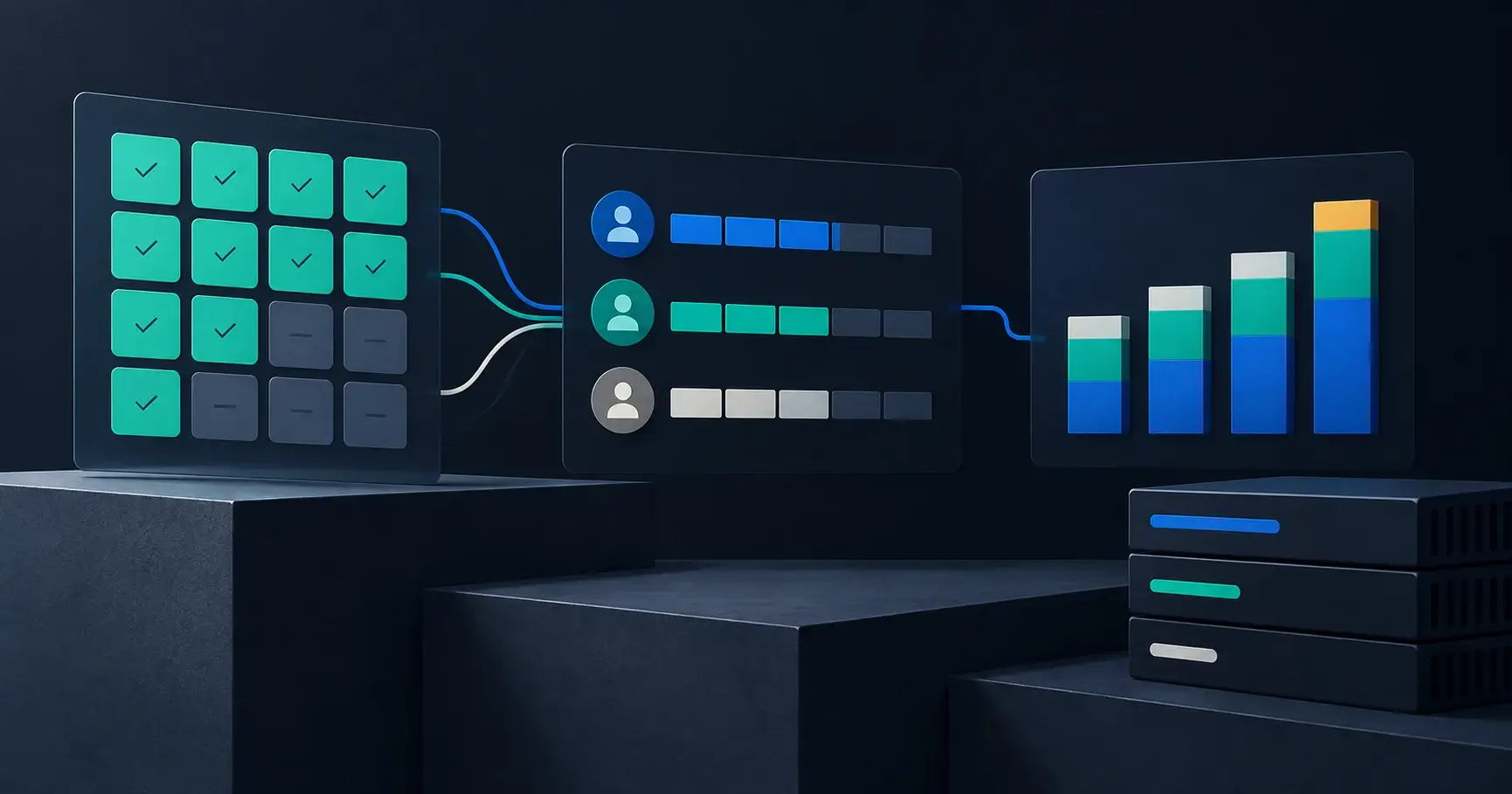
A multi-model architecture routes different tasks to different models based on the requirements of each task. Simple classification tasks go to small, fast, inexpensive models. Complex reasoning tasks go to larger, more capable models. Embedding generation uses specialized embedding models. Summarization might use a different model than question answering because the optimal characteristics are different.
The routing layer, the component that decides which model handles each request, is the key architectural element. Intelligent routing considers the complexity of the request, the latency requirements, the cost constraints, and the specific capabilities needed. A straightforward factual question might be routed to a fast, inexpensive model, while a nuanced analytical question that requires reasoning across multiple documents gets routed to a more capable model.
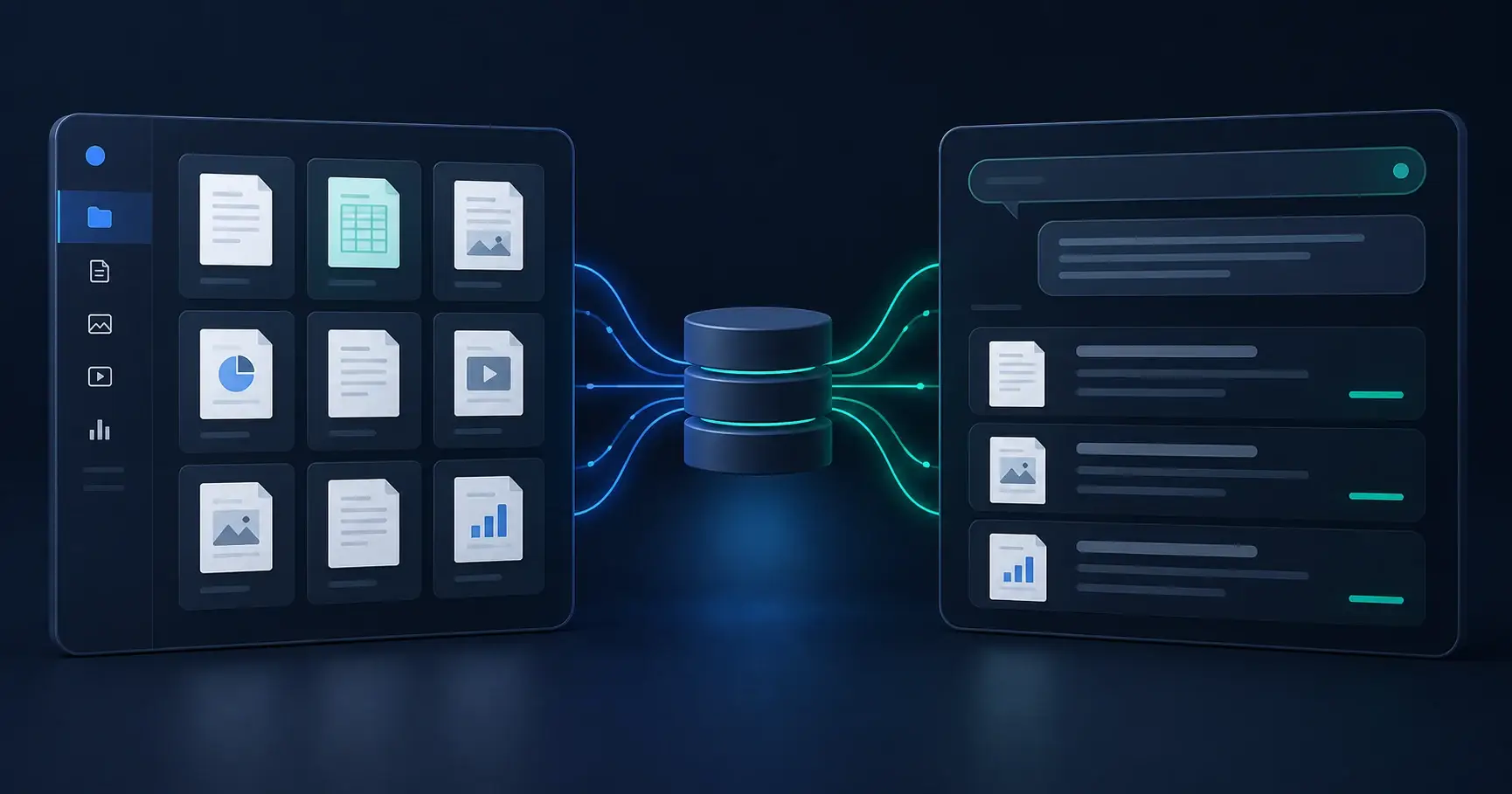
This is the approach that powers sophisticated AI platforms like Knowledge Spaces. Rather than sending every user query through the same model, the platform evaluates the query and selects the optimal combination of embedding model for retrieval, language model for generation, and processing model for any specialized extraction or analysis. The user sees a smooth experience; behind the scenes, multiple models collaborate to produce the best possible response.
Cost Optimization Through Model Selection
The cost implications of multi-model architecture are significant. Large frontier models charge premium rates per token, often materially more than smaller capable models. If 70 percent of your queries can be handled effectively by a model that costs one-twentieth as much as the frontier model, the savings are substantial.
This is not about cutting corners. It is about matching capability to requirement. A well-tuned small model that excels at your specific task will often outperform a larger general model while costing a fraction as much. The key is investing the effort to evaluate which models work best for each task in your pipeline and configuring the routing accordingly.
Open-source models add another dimension to the cost equation. Models that can be self-hosted eliminate per-token API costs entirely, replacing them with infrastructure costs that are more predictable and often lower at enterprise scale. The deployment flexibility to run models on-premise or in a private cloud is particularly valuable for organizations with high query volumes or strict data sovereignty requirements.
Resilience and Redundancy
Multi-model architecture inherently provides resilience that single-model systems lack. If one model provider experiences an outage, the system can fall back to an alternative model for that task. If a model is deprecated or its API changes, only the affected component needs to be updated rather than the entire system.
This resilience is critical for enterprise and government deployments where AI systems support mission-critical workflows. A knowledge management system that goes down because a model API is unavailable is not acceptable when analysts depend on it for time-sensitive decisions. Multi-model architecture with automatic failover ensures continuous availability even when individual components experience problems.
The model evaluation pipeline is another form of resilience. Organizations that continuously evaluate new models against their specific tasks can adopt improvements quickly when better options become available. This agility is possible in a multi-model architecture where swapping one component does not require rebuilding the entire system, but it is very difficult in a monolithic single-model architecture where everything is tightly coupled.
Implementation Considerations
Multi-model architecture adds complexity that single-model systems do not have. You need model management infrastructure that tracks which models are deployed, what they are used for, and how they are performing. You need a routing layer that makes intelligent decisions about model selection. You need monitoring that covers not just overall system performance but individual model performance and cost.
The integration engineering required is non-trivial. Each model has its own API format, tokenization scheme, context window limits, and performance characteristics. Abstracting these differences behind a consistent internal interface is necessary for maintainability, but it requires careful design to avoid losing model-specific capabilities in the abstraction.
For organizations that want the benefits of multi-model architecture without building the infrastructure from scratch, platforms that handle model orchestration internally provide a pragmatic shortcut. The platform manages model selection, routing, and failover, while the organization focuses on configuring the system for their specific knowledge and workflows.
Looking Ahead
The multi-model approach will become standard as the AI model ecosystem continues to diversify. The number of capable models is growing rapidly, and the performance gap between frontier models and task-specific alternatives is narrowing. Organizations that build multi-model architectures now will be positioned to adopt new capabilities as they emerge, swapping in better models as they become available without rebuilding their systems.
The future of enterprise AI is not about picking the right model. It is about building the right architecture, one that can use any model, adapt to new capabilities, optimize for cost and performance, and remain resilient as the technology changes. Multi-model architecture is that foundation.