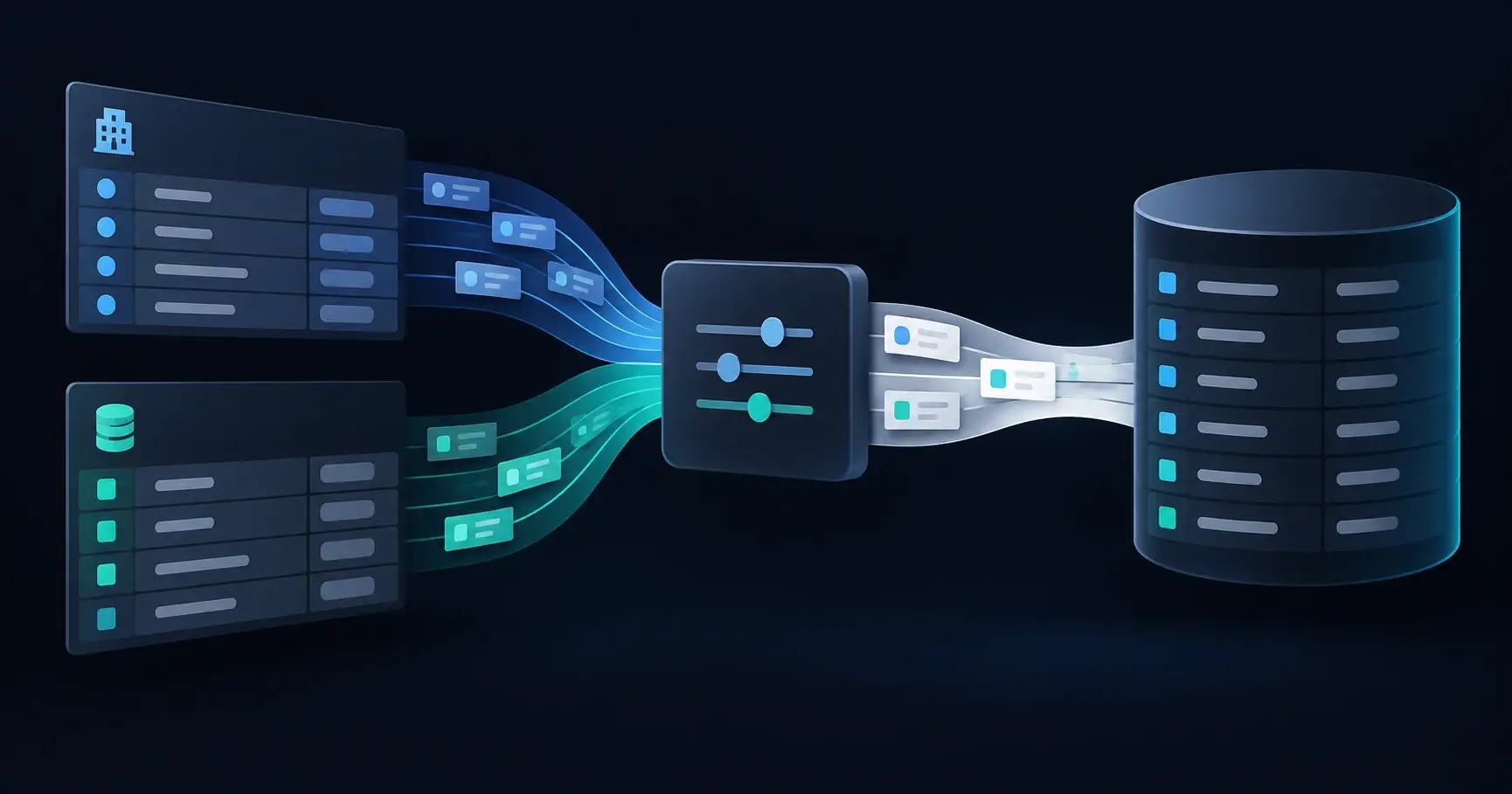

Enterprise leaders face a critical decision when building AI capabilities: invest in custom-built AI solutions tailored to specific business requirements, or adopt SaaS AI platforms that offer pre-built capabilities and faster deployment. Neither approach is universally superior. The right choice depends on your organization’s specific context, competitive dynamics, data assets, and long-term strategic objectives. This framework helps leaders evaluate the tradeoffs and make informed decisions.
Understanding the Spectrum
The custom vs. SaaS AI decision is a spectrum with many intermediate options. At one end, fully custom solutions involve building AI models, training pipelines, and application layers from scratch using your own data and engineering team. At the other end, pure SaaS AI platforms offer turnkey capabilities with minimal customization. In between lie approaches like fine-tuning open-source models, customizing configurable platforms, building on AI infrastructure services, and assembling solutions from modular AI components.
When Custom AI Solutions Win
Custom AI solutions deliver the highest value when your competitive advantage depends on proprietary AI capabilities that competitors cannot replicate. This is particularly true when you have unique data assets that create a genuine moat, when your use case requires domain-specific accuracy that general-purpose models cannot achieve, when you need full control over model behavior, updates, and deployment, when regulatory requirements demand complete transparency into model architecture and training data, or when the AI capability is core to your product or service offering.
The cost profile of custom AI is front-loaded: significant upfront investment in data engineering, model development, and infrastructure, followed by lower marginal costs as the system scales. Organizations with strong technical teams and clear long-term AI strategies often find that custom development delivers superior total cost of ownership over a three to five year horizon, especially for capabilities that would require expensive premium tiers on SaaS platforms.
When SaaS AI Platforms Win
SaaS AI platforms are the right choice when speed to deployment matters more than deep customization, when the AI capability is not a competitive differentiator, when your organization lacks the technical team to build and maintain custom AI systems, when the use case is well-served by general-purpose models, or when you need to validate an AI use case before committing to custom development. SaaS platforms excel at commoditized AI tasks like general document processing, standard language translation, basic sentiment analysis, and common computer vision tasks where the platform’s scale and continuous improvement deliver better performance than most organizations could achieve independently.
The Decision Framework
Evaluate your AI build-vs-buy decision across five dimensions. First, strategic importance: is this AI capability a core differentiator or a supporting function? Second, data uniqueness: does your data provide advantages that general-purpose models cannot capture? Third, performance requirements: do you need accuracy levels that off-the-shelf solutions cannot achieve? Fourth, control requirements: do you need full visibility into and control over model decisions? Fifth, organizational capability: do you have the technical talent and infrastructure to build and maintain custom AI systems?
High scores across these dimensions point toward custom development. Low scores suggest SaaS platforms will deliver better value. Mixed scores, the most common scenario, often lead to hybrid approaches where organizations use SaaS platforms for commodity AI tasks while investing in custom development for strategic differentiators.
How Sprinklenet Helps
Sprinklenet occupies a deliberate position on this spectrum. Our Knowledge Spaces platform is a configurable control layer, not a rigid SaaS product and not a from-scratch custom build. It provides the governed infrastructure that enterprise AI requires (multi-model orchestration, retrieval pipelines, access controls, audit logging) while remaining flexible enough to adapt to each organization’s unique data landscape, compliance requirements, and operational workflows.
This approach gives clients the speed advantages of a platform without the lock-in risks of a pure SaaS solution. The underlying models, data connectors, and workflow logic can be adjusted as requirements evolve, which they always do once AI systems reach production. For organizations that need capabilities beyond what any single platform offers, we build custom integrations and agentic workflows that extend the platform’s core functionality into territory that off-the-shelf tools cannot reach.
If you are evaluating the custom-vs-SaaS decision for your organization, we recommend starting with an AI readiness assessment that maps your specific requirements against the five dimensions above. The right answer is rarely purely custom or purely SaaS. It is usually a combination that puts your highest-value use cases on the right foundation from day one. Contact Sprinklenet to discuss your AI architecture strategy.
Jamie Thompson is founder and CEO of Sprinklenet, focused on governed AI implementation, systems integration, and Knowledge Spaces.
His work centers on moving AI from pilot activity into production with clearer retrieval, workflow, evaluation, and audit controls. LinkedIn profile.