
Intelligent automation represents the next evolution of business process optimization, moving beyond simple rule-based automation to systems that can interpret context, adapt to variation, and support decisions in complex situations. For organizations that have already automated their most straightforward processes, intelligent automation opens entirely new categories of work that can be augmented or transformed by AI. The business case can be compelling: well-scoped intelligent automation can reduce processing time, lower error rates, and free employees from tedious manual work.
Beyond RPA: What Makes Automation Intelligent
Traditional robotic process automation (RPA) excels at repeating well-defined, rules-based tasks, copying data between systems, filling out forms, generating standard reports. But RPA hits a wall when processes involve unstructured data, require judgment calls, or vary significantly from case to case. Intelligent automation combines RPA’s execution capability with AI technologies like natural language processing, computer vision, and machine learning to handle the messy, complex work that constitutes the majority of knowledge work in most organizations.
Consider invoice processing as an example. Basic RPA can extract data from invoices that follow a standard template. Intelligent automation, powered by AI-driven document understanding, can process invoices from thousands of different vendors in hundreds of different formats, flag discrepancies that require human attention, and learn from corrections to improve over time. The difference in scope and impact can be substantial, and this pattern repeats across dozens of enterprise functions.
Identifying High-Value Automation Opportunities
Not every process benefits equally from intelligent automation. The highest-value targets share several characteristics: they involve significant volume, require consistent accuracy, currently depend on manual effort that creates bottlenecks, and have clear inputs and outputs even if the processing logic is complex. Business process consulting helps organizations systematically identify these opportunities by mapping current workflows, quantifying the cost of manual processing, and prioritizing candidates based on feasibility, impact, and strategic alignment.
Common high-impact use cases include document classification and routing, contract analysis and extraction, customer communication triage, regulatory compliance checking, and quality assurance for data-intensive processes. Each of these involves unstructured inputs that defeat simple rule-based automation but yield readily to modern AI approaches. The key is starting with a thorough business process improvement assessment that identifies not just what can be automated, but what should be automated to deliver the greatest organizational value.
The Technology Stack for Intelligent Automation
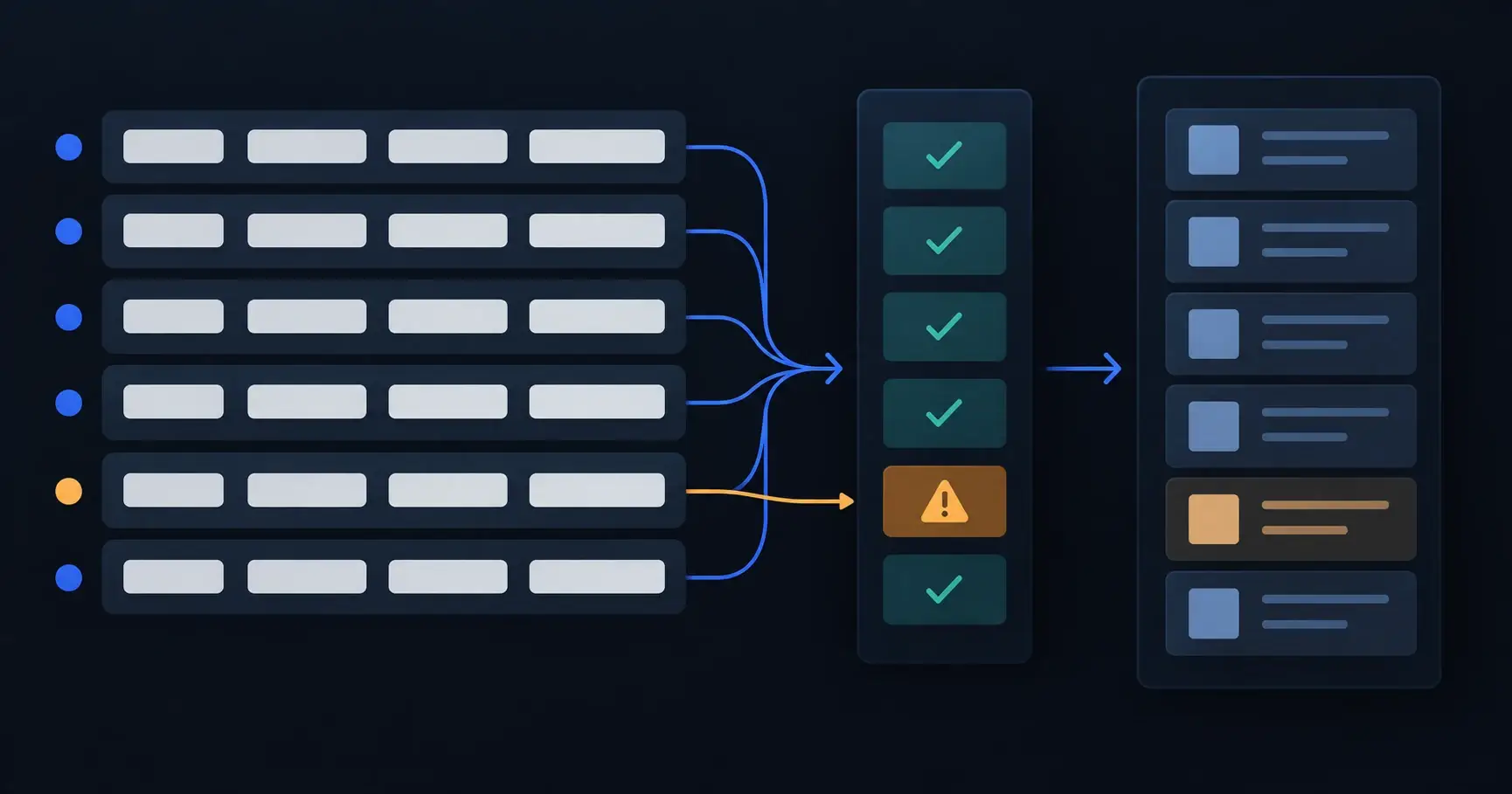
Building effective intelligent automation requires assembling the right combination of technologies for each use case. Large language models provide natural language understanding and generation capabilities. Computer vision handles document processing, image analysis, and visual inspection tasks. Machine learning models deliver prediction, classification, and anomaly detection. Orchestration platforms coordinate the workflow, routing work between AI components, human reviewers, and downstream systems.
Integration architecture is where many intelligent automation initiatives stall. Enterprise environments typically involve dozens of systems of record, each with its own data formats, authentication requirements, and API limitations. Custom application development capabilities are essential for building the connective tissue that allows intelligent automation to operate reliably across complex technology environments. Off-the-shelf tools often promise easy integration but deliver it only for the most common platforms, leaving organizations to build custom solutions for the rest.
Human-AI Collaboration: The Operating Model
The most successful intelligent automation implementations treat AI as a colleague rather than a replacement. This means designing workflows where AI handles the high-volume, routine aspects of work while escalating exceptions, edge cases, and high-stakes decisions to human experts. The result is a human-AI operating model that delivers speed and consistency on routine work while preserving human judgment where it matters most.
This operating model requires careful technology strategy and change management. Employees need to understand what the automation does, trust its outputs, and know how to intervene when needed. Metrics should track both automation performance and the quality of human-AI handoffs. Organizations that invest in this operating model see higher adoption rates, better outcomes, and more sustainable automation programs than those that try to remove humans from the loop entirely.
Measuring Automation ROI
Intelligent automation ROI extends well beyond direct labor savings. Faster processing times improve customer experience and enable faster business decisions. Reduced error rates eliminate costly rework and compliance risk. Improved data quality cascading through downstream systems multiplies the value of the automation investment. Employee satisfaction improves when people are freed from repetitive tasks to focus on work that requires creativity, empathy, and strategic thinking.
The Enterprise AI Scorecard helps organizations assess their readiness for intelligent automation by evaluating data quality, process documentation, infrastructure maturity, and organizational culture. Organizations that score well on these dimensions typically see faster time to value and stronger ROI from their automation investments.
Getting Started with Intelligent Automation
The most effective path to intelligent automation starts with a focused pilot that demonstrates value quickly while building organizational capability for broader deployment. Select a process that is important enough to matter but bounded enough to deliver results within weeks, not months. Build the measurement framework before you build the automation so you can demonstrate impact with data rather than anecdotes. And partner with teams that understand both the AI technology and the business process context, because the best algorithm in the world cannot compensate for a poorly designed workflow.
Intelligent automation is not a one-time project but an ongoing capability that grows more valuable over time as the organization identifies new use cases, improves existing automations, and builds internal expertise. Contact Sprinklenet to discuss how intelligent automation can transform your organization’s most labor-intensive processes into streamlined, AI-powered workflows.