Ask a new enterprise knowledge assistant a policy question and watch which document it answers from. Often it is the wrong one: a stale draft on a shared drive instead of the approved version, or a wiki page summarizing the rule instead of the rule itself. The model did nothing wrong. It summarized what retrieval handed it, and retrieval handed it the loudest document, not the authoritative one.
That is why the retrieval layer is the product foundation, not a background utility. Most of what determines whether people can trust an operational AI system is decided before the model sees a token: which sources get indexed, which version wins, who sees what, and how withdrawn content leaves the index.
Executive Takeaway
- Source selection, permissions, and freshness determine answer quality more than model choice. Retrieval is the foundation; the model sits on top.
- Decide which system wins when documents conflict before anything is indexed. Ranking cannot fix an authority problem.
- Measure retrieval separately from generation with a fixed question set, or the team will tune the wrong half of the system.
Start With the Corpus, Not the Model
Operational knowledge rarely lives in one place. The same travel policy exists as an approved PDF in a document system, an intranet summary, three drafts in a shared folder, and a screenshot in a ticket thread. Someone has to decide which one is authoritative, and that call belongs to the business owner of the content, not the engineer wiring the connector.
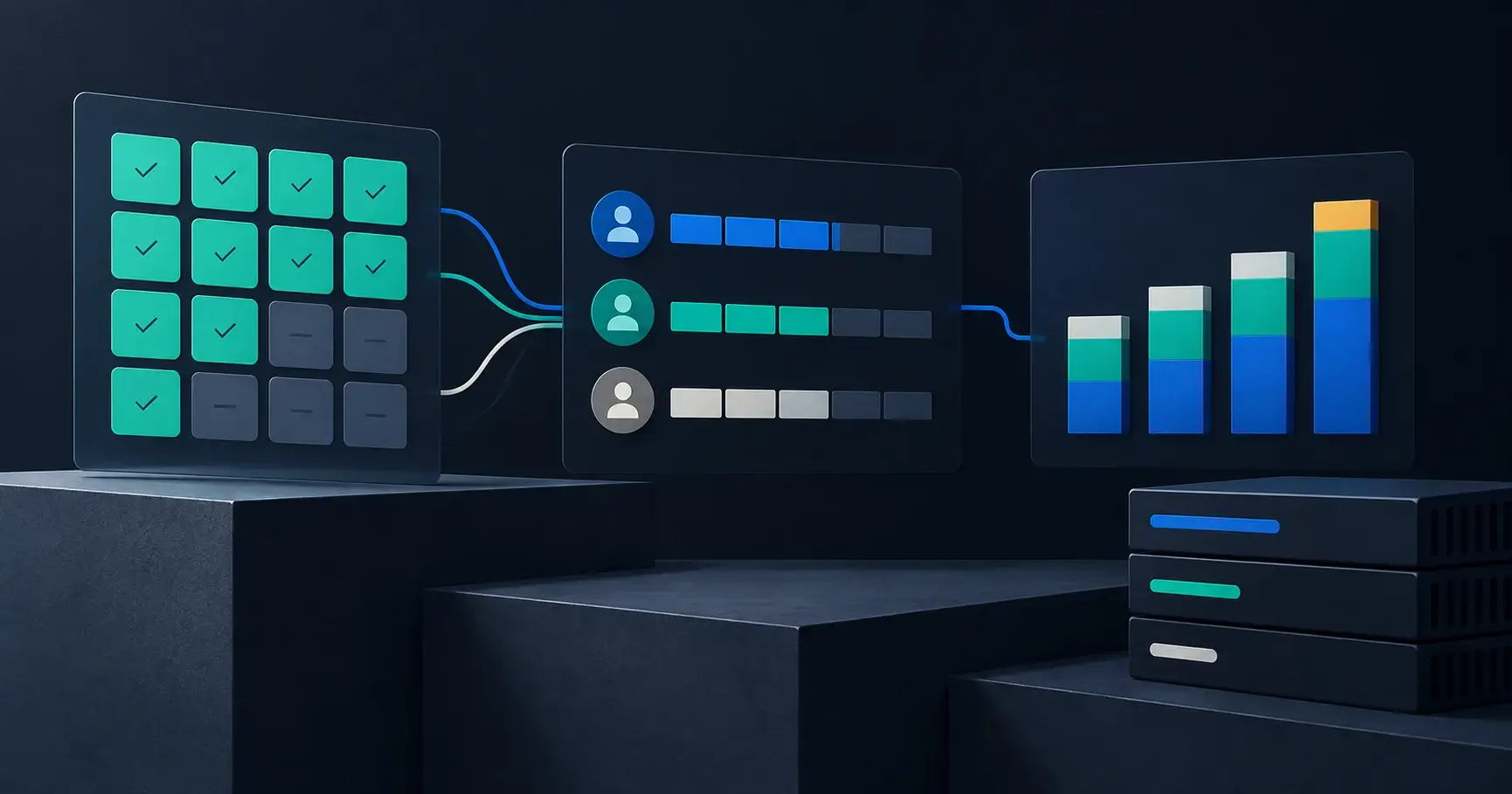
The practical move is a source inventory: for each document class, name the system of record, the human owner, the refresh cadence, and the audience. Unglamorous, but it pays back more than any ranking tweak, because a pipeline that indexes everything treats the abandoned draft and the approved policy as equals.
What Good Looks Like
- A source inventory naming the authoritative system, owner, and refresh cadence for each document class
- Metadata normalized at ingestion: effective dates, owning department, and access level; ranking and filtering both depend on it
- Indexing, ranking, permission filtering, and citation formatting as separate stages that can be tested and replaced independently
A good retrieval layer is also easy to explain: which systems feed it, why an answer cited a given document, and who gets paged when a connector breaks.
Permissions Are a Retrieval Problem, Not a UI Problem
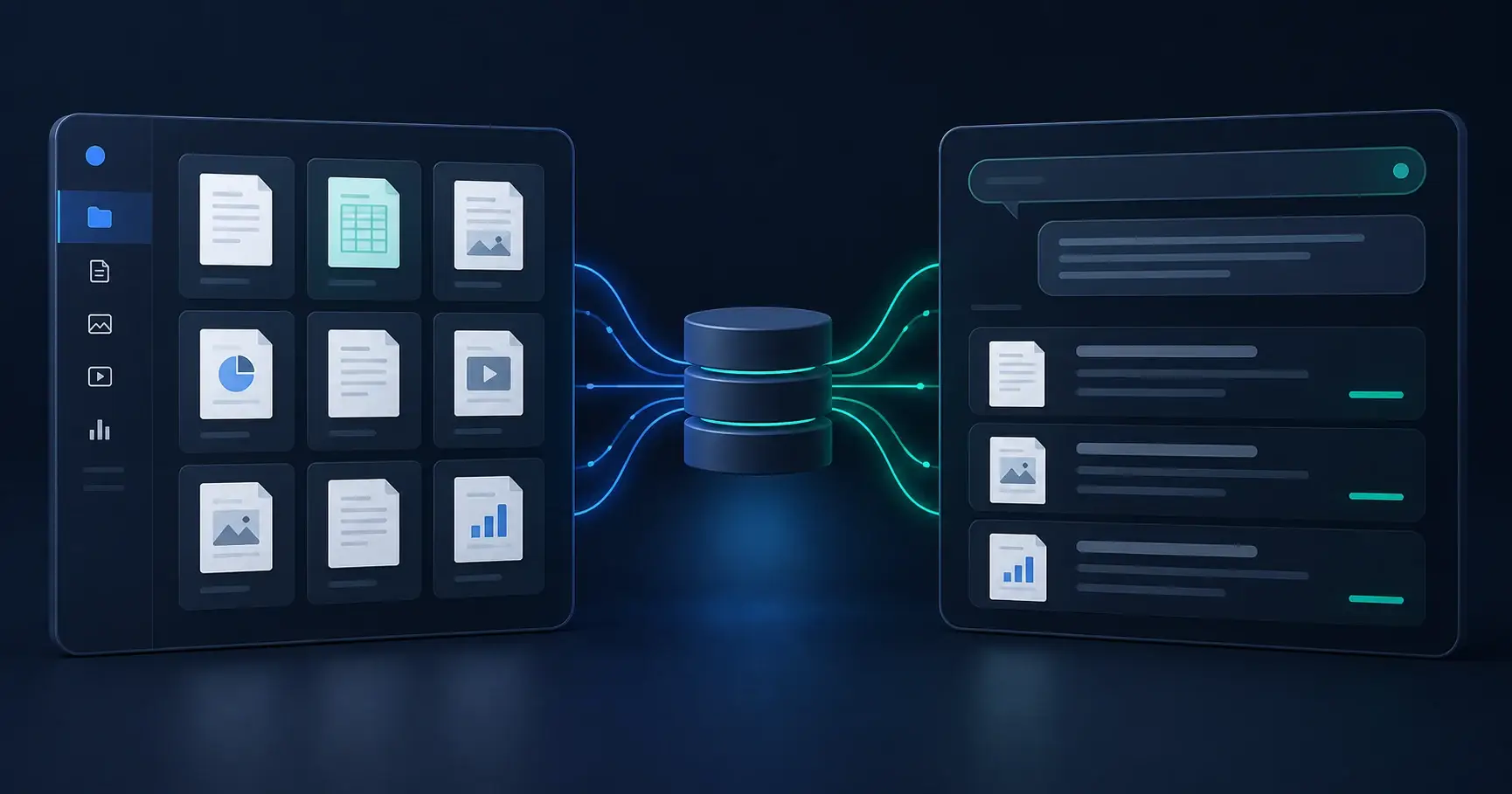
The most common security mistake in this work is indexing everything into one store and filtering results in the application layer. That fails twice: post-retrieval filtering leaks information through ranking behavior and snippets, and it breaks the moment a second application shares the index. Permission filtering belongs inside the retrieval query, using access metadata carried from the source system, and it has to be testable: ask the same question as users with different entitlements and verify the restricted document never appears.
Document lifecycle deserves the same discipline. When legal withdraws a document from the system of record, the removal has to propagate to the index and its embeddings on a defined schedule. An assistant that keeps citing a withdrawn policy is not a quality problem; it is a compliance incident.
A Delivery Pattern That Holds Up
The pattern that survives production is narrow and staged: one workflow, one corpus, one user group. Prove the data path end to end, connector to citation, before adding a second source. In practice that is a six-week path from pilot to production: early weeks on the source inventory and connector plumbing, the middle on permission mapping and a fixed evaluation set of real questions with known correct sources, the final stretch on operations: index rebuilds, sync alerts, and a rollback plan.
Evaluate retrieval on its own before judging answers. If the right passage never reaches the candidate set, no prompt work will rescue the response; if it does, most generation problems become tractable. A fixed question set with graded source relevance tells you more than a demo transcript.
Production Readiness Signals
- The source inventory is complete, and every connector has an owner and a sync-failure alert
- Permission filtering is enforced inside the retrieval query, with a test suite proving it across user roles
- Citations resolve to the current version of the source document, not to a fragment of extracted text
- Updates and deletions propagate to the index on a schedule someone has agreed to defend
These are not bureaucratic gates. They are the difference between a system the security team approves once and one re-reviewed every quarter because nobody can show how it behaves.
Common Failure Modes
- Embedding everything: pointing the pipeline at a whole shared drive with no quality gate, so drafts and duplicates compete with approved documents
- Deferring permissions: treating access control as a launch-week feature instead of an ingestion-time design decision
- Decorative citations: displaying a source link without verifying that the cited passage actually supports the answer
What makes these failures expensive is when they surface: invisible in a demo on a curated folder, obvious in week five when real users with real entitlements ask what the demo never covered.
Questions to Ask
- Which source wins when documents conflict, and who made that call?
- How does a stale or withdrawn document leave the index, and how long does that take?
- Can retrieval honor user permissions inside the query, and can the team prove it with a test?
A team that answers these in specifics, naming systems and owners, is ready to build. One that cannot should spend two weeks on the source inventory first; that is far cheaper before launch than after.
Where Knowledge Spaces Fits
Sprinklenet built Knowledge Spaces on this premise: governed retrieval over enterprise knowledge is worth engineering carefully, designed for enterprise and government-grade requirements from the start. The platform carries the control plane described here: source connectors, permission-aware retrieval, and citation behavior. That lets a delivery team spend its six weeks on the workflow instead of the plumbing.
Explore Knowledge Spaces, review our AI services, or contact Sprinklenet to talk through a retrieval problem you are working on.