
AI systems integration is the work that turns a promising model into a system people can actually use. Enterprise and government teams rarely need another isolated chatbot. They need AI integration services that connect data sources, permissions, workflows, applications, monitoring, and governance into one reliable operating environment.
That is the practical role of an AI systems integrator. The integrator translates strategy into architecture, architecture into working software, and working software into a controlled production capability. Sprinklenet approaches this work through AI advisory, implementation, RAG system development, LLM orchestration, and governed middleware such as Knowledge Spaces.
What AI Systems Integration Actually Includes
The hard part of enterprise AI implementation is usually not choosing a model. The hard part is connecting the model to the operating environment without breaking security, data quality, compliance, or user trust.
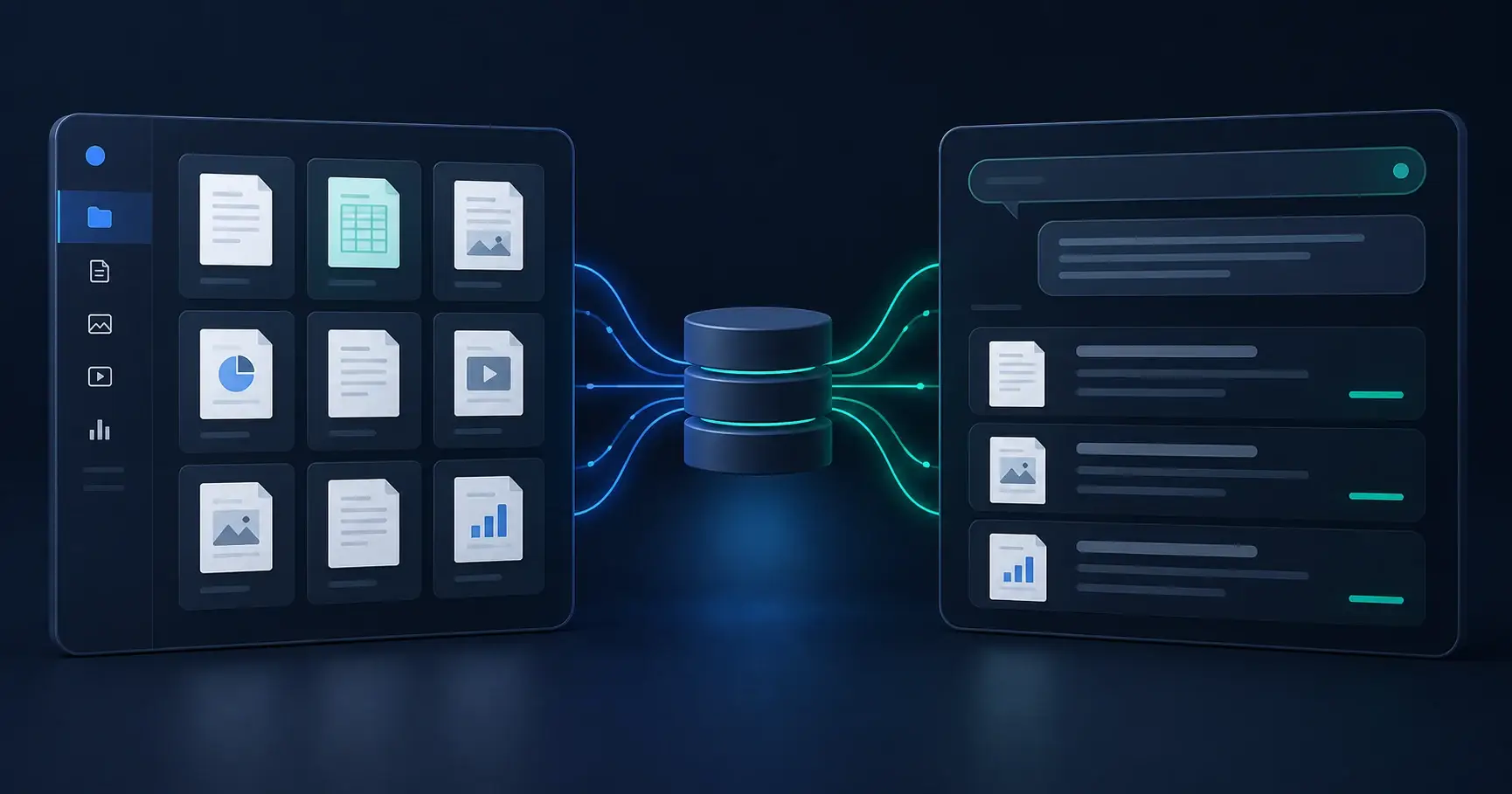
- Data integration: connecting SharePoint, Google Drive, databases, APIs, file stores, email systems, and line-of-business applications.
- Retrieval architecture: designing RAG pipelines, chunking strategies, embedding workflows, metadata models, and source citation patterns.
- LLM orchestration: routing tasks across models, managing prompts, tools, policies, cost, latency, and fallback behavior.
- Workflow integration: embedding AI into casework, research, compliance, proposal, help desk, finance, and knowledge workflows.
- Governance: adding access controls, audit logs, human review, evaluation, content guardrails, and model change management.
How AI Integration Works in Enterprise Environments
A practical enterprise AI implementation usually begins with a workflow map. The team identifies who will use the system, what data it needs, what decisions it supports, what systems it must touch, and what errors would create operational risk.
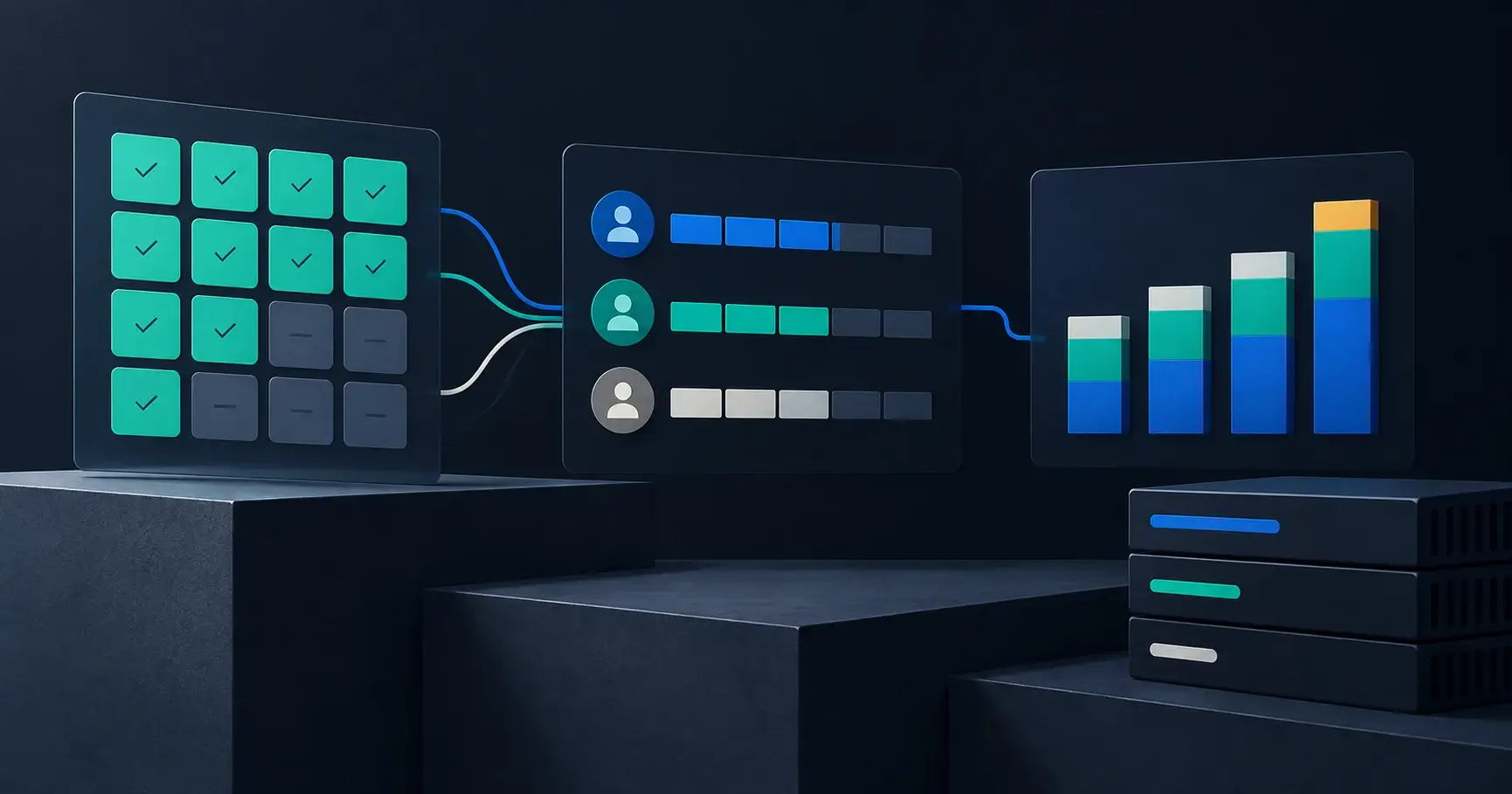
From there, the architecture separates the major layers: source systems, ingestion, normalization, retrieval, orchestration, user experience, observability, security, and governance. This layered approach makes the system easier to test, improve, and adapt when models or requirements change.
Sprinklenet’s AI implementation capabilities focus on this integration layer. The objective is not to bolt AI onto an existing process. The objective is to design a controlled operating pattern that can survive production usage, changing data, changing models, and real users.
RAG and LLM Orchestration Belong Together
RAG system development gives AI systems access to approved knowledge. LLM orchestration determines how models, tools, policies, and retrieval results work together. Treating these as separate projects creates fragile systems.
A production architecture should decide when retrieval is required, which sources are allowed, how citations are generated, which model handles the task, what guardrails apply, and when a human review step is needed. These decisions should be explicit, testable, and auditable.
AI Integration for Government and Prime Contractors
Government agencies and prime contractors face additional constraints: procurement language, data sensitivity, authority to operate considerations, subcontractor coordination, records management, and auditability. AI integration for government environments has to support mission workflows while preserving control over data, access, and outputs.
Specialized tools such as FARbot and platforms such as Knowledge Spaces show how AI can support regulated work without pretending that a generic chatbot is enough. The same pattern applies to proposal operations, compliance workflows, research support, document search, and program management.
What a Strong AI Integrator Delivers
- A reference architecture that separates data, retrieval, orchestration, governance, and user experience.
- A staged implementation plan that moves from pilot to production without losing operational control.
- Evaluation methods that test retrieval quality, answer accuracy, latency, cost, and user acceptance.
- Security and governance controls that match the environment rather than treating policy as an afterthought.
- Documentation that helps executives, technical teams, and procurement stakeholders understand the system.
The market is crowded with AI tools. The harder and more valuable category is AI systems integration: making those tools work inside real organizations with real constraints.
2026 Buyer Note
Good AI systems integration is not a staffing label. It is a delivery discipline that combines architecture, connectors, security, RAG, model orchestration, evaluation, and change management into one production path.
Integration Work Packages Buyers Should Expect
- Discovery: workflow mapping, source system inventory, user roles, security constraints, and measurable success criteria.
- Architecture: data flow diagrams, model routing policy, retrieval design, logging plan, and deployment pattern.
- Build: connectors, APIs, document pipelines, orchestration services, permission filters, and user-facing workflows.
- Evaluation: known-answer tests, retrieval scoring, latency and cost testing, security review, and user acceptance.
- Operations: monitoring, incident response, model updates, connector maintenance, and governance review cadence.
Signals an AI Integrator Is Production-Ready
- They talk about identity and data boundaries before model choice.
- They can explain how retrieval, citations, and audit logs work together.
- They design for model changes instead of locking the workflow to one provider.
- They define what happens when the AI is uncertain, unavailable, or wrong.
- They give executives and technical teams the same delivery map, at different levels of detail.
Reference Architecture for Production AI Integration
A production AI integration architecture usually includes six connected layers. The first is source data: documents, databases, SaaS platforms, records systems, APIs, and operational tools. The second is identity: SSO, group membership, role-based access, tenant boundaries, and service credentials. The third is retrieval and context assembly, where RAG pipelines select the right evidence and preserve source traceability.
The fourth layer is model orchestration: selecting the right model for the task, applying policy, calling tools, managing fallbacks, and controlling cost. The fifth layer is user experience: chat interfaces, embedded workflow panels, analyst tools, or automation triggers. The sixth layer is observability: logs, evaluations, incident review, cost monitoring, and governance reporting.
Good integration work keeps these layers visible. That makes it possible to swap a model, add a connector, tighten a permission rule, or improve retrieval without breaking the whole system.
Questions to Resolve Before Procurement
- Which workflow will use the AI output, and what action follows that output?
- Which data sources are authoritative, and which are only supporting context?
- Which users, groups, or tenants should be able to retrieve each class of information?
- Which model providers are approved for each data classification?
- What evidence will prove that the system is accurate, secure, adopted, and worth operating?
Those questions make the scope sharper. They also help buyers compare vendors on delivery maturity instead of demo polish.
Jamie Thompson is founder and CEO of Sprinklenet, focused on governed AI implementation, systems integration, and Knowledge Spaces.
His work centers on moving AI from pilot activity into production with clearer retrieval, workflow, evaluation, and audit controls. LinkedIn profile.