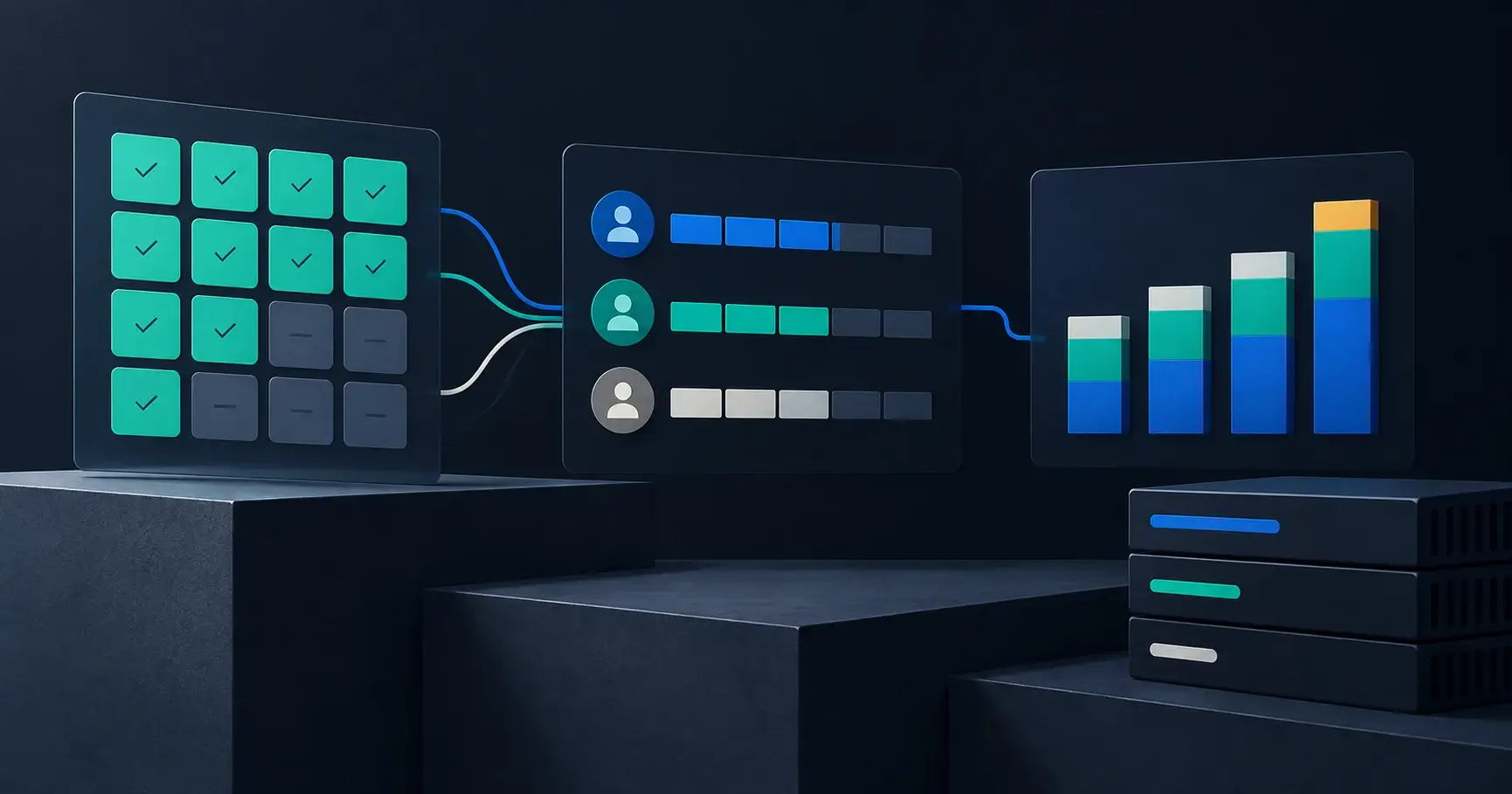

The boundaries between AI modalities are dissolving rapidly. Where organizations once deployed separate systems for text analysis, image recognition, and audio processing, multimodal AI models now handle all three within unified architectures. This convergence is creating business opportunities that were impossible just two years ago, enabling applications that understand context across visual, textual, and auditory inputs simultaneously. For enterprise leaders, understanding multimodal AI capabilities is essential for identifying the next wave of AI-driven competitive advantage.
The Multimodal Revolution: What Changed
The emergence of current multimodal foundation models with vision capabilities has fundamentally changed what AI systems can do. These models can analyze images and documents, understand charts and diagrams, interpret video content, process audio inputs, and generate content across modalities, all within a single inference call. This eliminates the complex orchestration pipelines that previously required separate models for each modality, dramatically simplifying architecture and reducing latency.
Business Applications of Multimodal AI
Intelligent Document Processing
Multimodal AI transforms document processing by understanding documents the way humans do, interpreting text, images, tables, charts, and layout simultaneously. In government contracting, this means AI can analyze complex proposals that include technical diagrams, organizational charts, pricing tables, and narrative text as an integrated whole. In financial services, multimodal models can process statements, invoices, and supporting documentation that combine structured data with handwritten notes and stamps.
Visual Quality Assurance and Inspection
Manufacturing and infrastructure organizations are deploying multimodal AI for quality inspection that combines visual analysis with contextual understanding. A multimodal system can examine a product image, compare it against specification documents, identify defects, and generate natural language reports explaining what it found, all in a single workflow. This goes beyond traditional computer vision by incorporating the contextual understanding needed to distinguish acceptable variation from genuine defects.
Meeting Intelligence and Knowledge Capture
Multimodal AI can process meeting recordings by simultaneously analyzing audio (what was said), video (who said it, their reactions), and shared content (slides, documents, screen shares). The resulting intelligence goes far beyond simple transcription to include action item extraction, decision documentation, sentiment analysis, and knowledge graph updates that capture the organizational knowledge generated in meetings.
Enhanced Customer Interactions
Customer service applications benefit enormously from multimodal capabilities. Customers can share photos of products, screenshots of error messages, or documents that need explanation, and the AI system can understand and respond to the visual context alongside the verbal or textual query. Custom AI chatbots with multimodal capabilities can handle support scenarios that previously required human agents simply because the interaction involved images or documents.
Implementation Challenges
Multimodal AI deployments face unique challenges including higher computational costs compared to text-only models, privacy concerns around image and audio processing, the need for multimodal training data for fine-tuning, and the complexity of evaluating model performance across multiple modalities simultaneously. Organizations must also consider the latency implications of processing multiple modalities and design their architectures to meet real-time requirements where needed.
Getting Started With Multimodal AI
The most effective path into multimodal AI starts with identifying processes where your teams already work across multiple content types simultaneously. Document-heavy workflows in procurement, compliance, and program management are natural starting points, these are areas where humans constantly switch between reading text, interpreting charts, and analyzing images, and where AI can deliver immediate time savings.
Begin with a bounded pilot that focuses on a single multimodal workflow rather than attempting a broad deployment. Measure the baseline time and accuracy of human-only processing, then compare it against AI-assisted results. This gives you concrete ROI data rather than theoretical projections, which matters when you are making the case to leadership for broader adoption.
Sprinklenet’s Knowledge Spaces platform supports multimodal document processing and retrieval, enabling organizations to build governed workflows that combine text, image, and document analysis within a single auditable pipeline. The platform’s multi-model orchestration routes each modality to the most capable model, using the strongest available vision-capable models for each task, while maintaining consistent governance and logging across every interaction.
For teams ready to explore what multimodal AI can do for their operations, an AI readiness assessment is the right first step. It maps your current workflows to multimodal opportunities and identifies the highest-impact starting points. Contact Sprinklenet to get started.