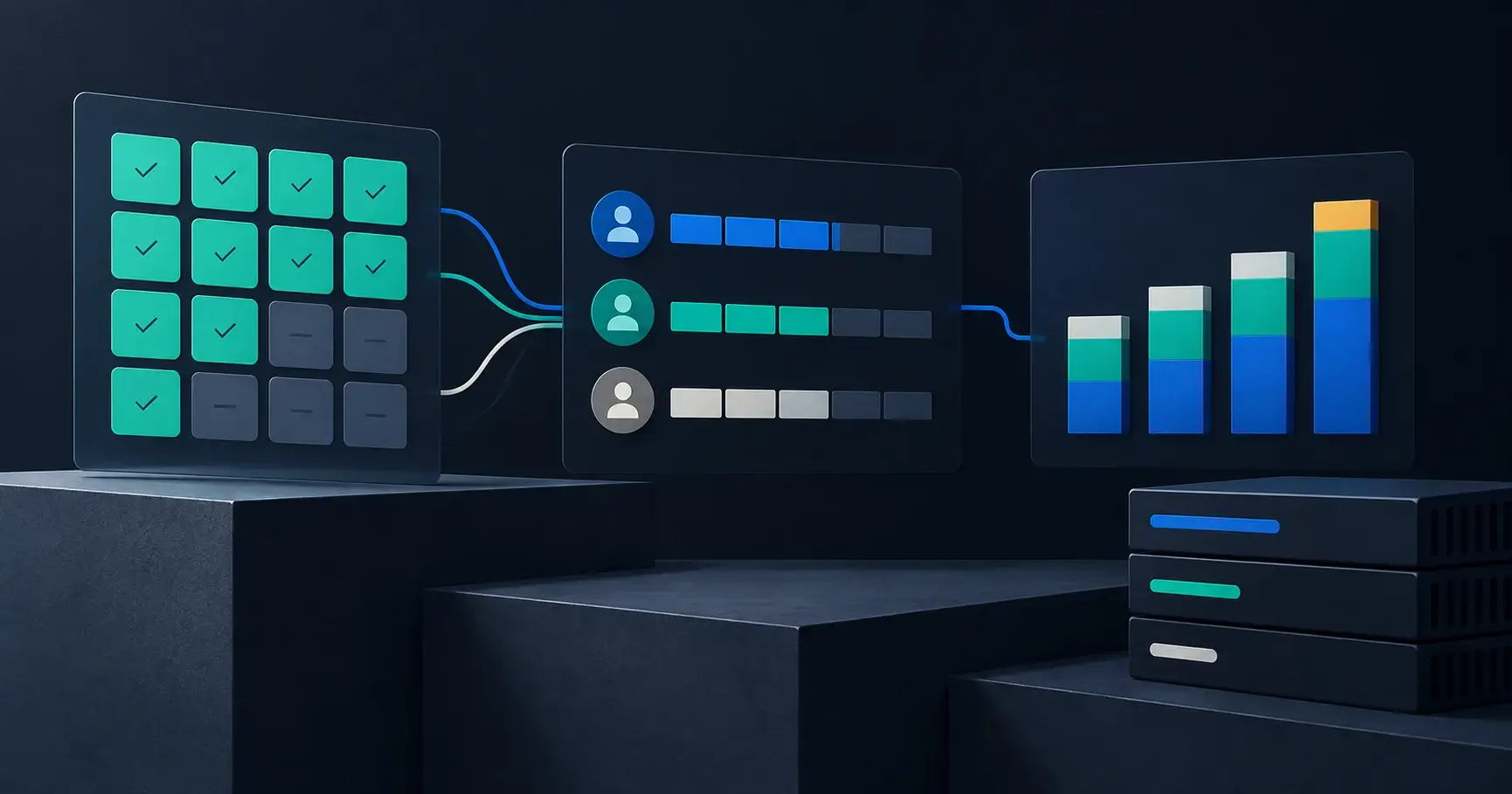

LLM orchestration is the coordination layer behind serious enterprise AI systems. It determines which model handles a task, what context the model receives, which tools it may call, what policies apply, and how the system responds when cost, latency, quality, or security constraints change.
A single-model chatbot can be useful for a pilot. Production AI needs a more durable architecture. Enterprise teams need model flexibility, governed retrieval, observable workflows, and a way to adopt better models without rebuilding the application each time the market changes.
Why Multi-LLM Architecture Matters
No single model is best at every task. Some models are better at long-context analysis. Others are faster, cheaper, stronger at code, better at structured output, or more appropriate for a specific security boundary. Multi-LLM architecture gives the system options.
- Reliability: route around outages, degraded model performance, or rate limits.
- Cost control: reserve premium models for tasks that justify the cost.
- Task fit: use different models for extraction, summarization, reasoning, drafting, classification, or tool use.
- Governance: apply model-specific controls, logging, and approval patterns.
What LLM Orchestration Controls
Orchestration is not just model selection. It also controls prompts, memory, tools, retrieval, structured output, evaluation, fallbacks, human review, and audit logging. In regulated settings, these controls are often more important than the model itself.
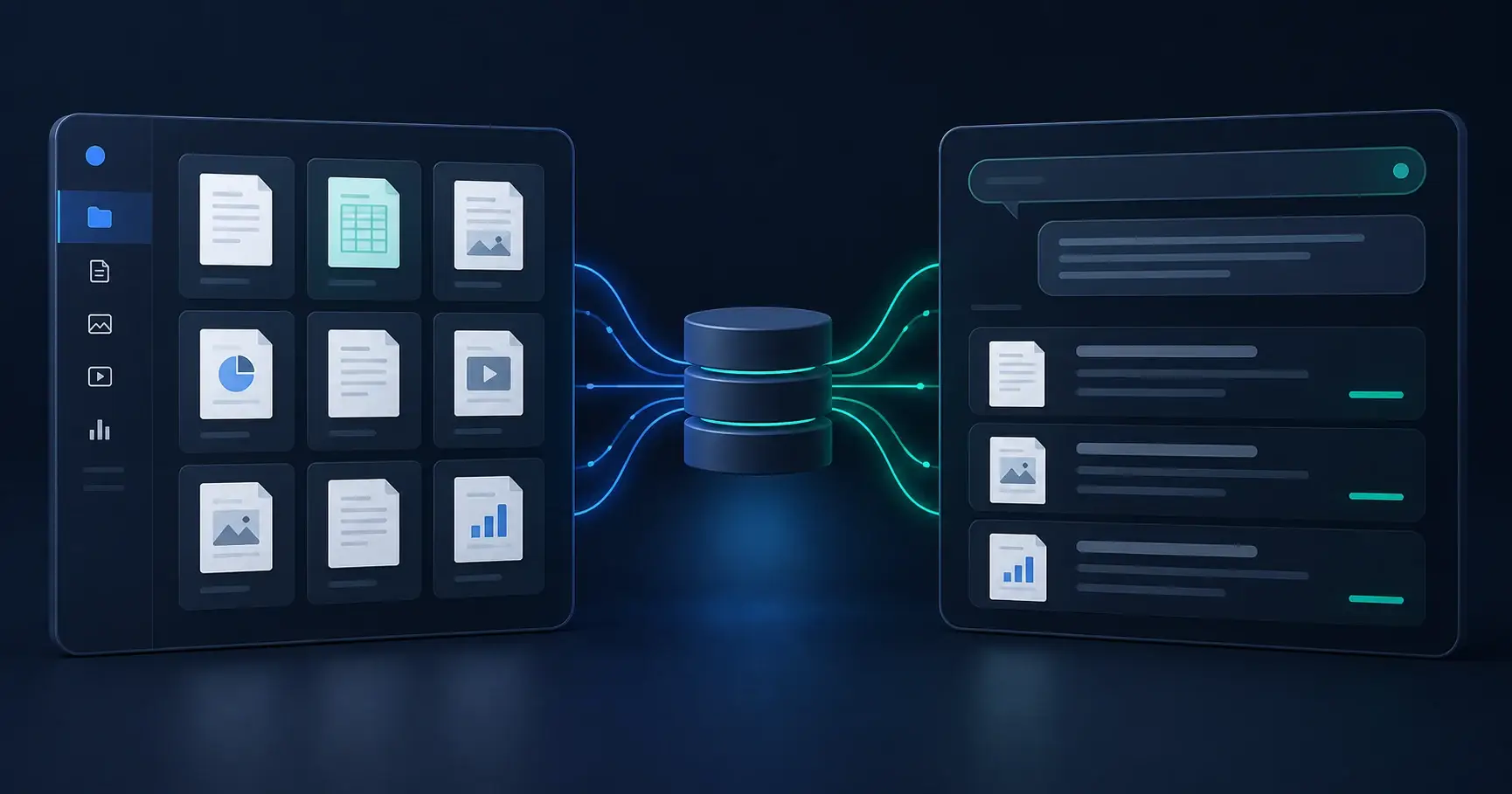
Knowledge Spaces is designed as a middleware control layer for this kind of architecture. It supports model selection, configuration, retrieval, guardrails, and auditability across AI workflows. The Knowledge Spaces white paper describes the platform’s role as a governed deployment layer.
LLM Orchestration and RAG
RAG and LLM orchestration should be designed together. Retrieval decides what knowledge enters the prompt. Orchestration decides when retrieval is required, which collection is searched, which model evaluates the results, and whether a response needs a citation or review step.
This matters for enterprise AI implementation because users do not care whether a failure came from retrieval, prompting, model routing, or permissions. They experience the system as one workflow. The architecture should be managed the same way.
Government and Enterprise Scenarios
- A compliance assistant routes FAR-related questions to approved regulatory knowledge and requires citations before answers are shown.
- A proposal assistant retrieves past performance, capability language, and solicitation requirements before generating a draft response.
- A help desk assistant handles routine questions with a fast model and escalates ambiguous cases to a stronger model or human reviewer.
- A research workflow uses one model for document triage, another for summarization, and another for structured extraction.
What Buyers Should Ask
- Can the system switch models without a full rebuild?
- How are routing decisions logged and evaluated?
- What happens when retrieval confidence is low?
- Which tools can the model call, and how are those tool calls controlled?
- How are cost, latency, accuracy, and risk measured over time?
Sprinklenet’s AI integration services treat LLM orchestration as core infrastructure for production AI, not an implementation detail.
Routing Policy in a Real System
LLM orchestration becomes valuable when routing decisions are explicit. A system might use one model for fast classification, another for long-context document review, another for structured extraction, and another for high-reasoning synthesis. It may also restrict sensitive data to approved providers or private deployments while using lower-cost models for low-risk tasks.
Routing policy should consider task type, data classification, latency requirement, cost budget, output format, and fallback behavior. The policy should be documented and observable so administrators can understand why a request went to a specific model and what context the model received.
Operational Controls for Multi-Model AI
- Provider controls: approved models, data-handling rules, rate limits, and outage fallbacks.
- Prompt controls: versioned system prompts, task templates, and review paths for high-risk changes.
- Retrieval controls: context assembly rules that determine when RAG is required and which collections may be used.
- Cost controls: usage tracking, model selection thresholds, caching, and alerts.
- Audit controls: logs that connect user, task, model, retrieved sources, tool calls, and output.
Without orchestration, each AI workflow becomes its own isolated implementation. With orchestration, teams can improve the model layer while keeping governance, retrieval, and user workflows stable.
Evaluation and Portability
Multi-model systems need evaluation that is independent of any one provider. The team should maintain test sets for the tasks that matter: extraction, summarization, retrieval-grounded answers, refusal behavior, structured output, tool calling, and long-context analysis. When a new model becomes available, it can be tested against the same workload before being promoted into production.
That evaluation layer also protects portability. Organizations should avoid architectures where prompts, tools, citations, and policy controls are tightly coupled to a single provider’s assumptions. The orchestration layer should absorb model change so the user workflow and governance model remain stable.
When Orchestration Is Worth It
Small internal tools may not need a full orchestration layer. The investment becomes worthwhile when the organization has multiple AI workflows, sensitive data, changing model options, cost pressure, reliability requirements, or a need to prove how outputs were generated. At that point, orchestration becomes operational infrastructure rather than engineering overhead.
The practical test is simple: if model choice, tool access, retrieval policy, cost, and auditability are becoming recurring decisions, they should move into a shared orchestration layer instead of being solved differently in every application.
That shared layer gives leadership a cleaner view of risk, spend, reliability, and adoption across the full AI portfolio.