
A pattern keeps surfacing in Sprinklenet’s client conversations. Different companies, different verticals, different revenue levels. But the same question every time.
“Do we bolt AI onto what we have, or do we start over?”
For any SaaS company with real customers and real revenue, this is one of the most consequential architectural decisions of 2026. The organizations that frame it clearly and move decisively will accelerate. The ones that defer or split the difference without conviction will lose ground to competitors who moved faster.
Here is how the decision breaks down.
The Case for Embedding
An installed base is an extraordinary asset. Customers who pay every month. Relationships. Data. Workflows that people depend on.
That is a beachhead worth protecting and building on.
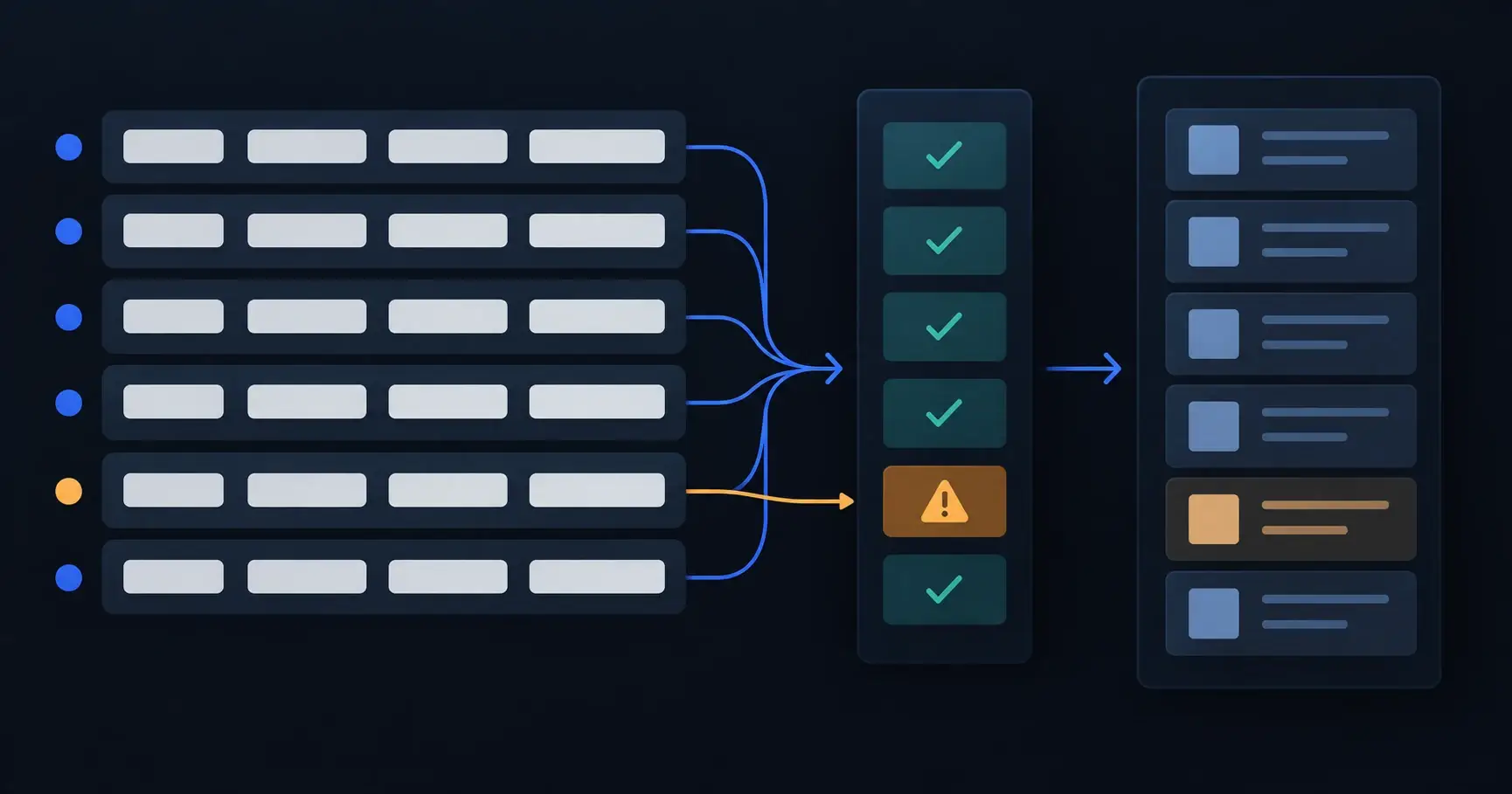
The smart version of the embed strategy looks like this. You decompose your platform into its core functional areas. Each one gets its own AI layer, purpose-built for that domain. Then you put a master agent on top that orchestrates across all of them. Your customers get AI capabilities inside the product they already use, without switching costs, without migration pain, without retraining their teams.
This is the strategy that preserves revenue. It respects the fact that your customers chose you for a reason. And it lets you move incrementally, shipping value every sprint instead of disappearing into a development cycle for a year.
Experience across multiple engagements shows this works well when the underlying architecture is reasonably modern, when there is a clear API layer, and when the team has the discipline to treat each AI integration as a product decision with clear success criteria.
The Case for Going Native
Now consider the other side.
OpenAI, Anthropic, Google, xAI, Meta. These companies have billions of dollars, tens of thousands of engineers, and they are building platforms that overlap with yours. Every single one of them is expanding into adjacent capabilities. The pace of innovation is unlike anything the industry has seen in 25 years of building software.
If your product was built in 2015 on a monolithic architecture with years of technical debt accumulated, embedding AI into it has real limits. You can make incremental progress, and it may even feel fast for a while. But at some point the foundation constrains what is possible.
Going AI-native means designing from the ground up around what foundation models can do today and what they will be able to do in six months. It means building your product as an orchestration layer, not a feature set. It means accepting that the model will handle 80% of what your engineers used to build manually, and your job is to own the 20% that makes you irreplaceable.
This path is faster for companies that have the conviction to take it. It also requires honest decisions about which legacy investments to preserve and which to leave behind.
The Real Answer
Most companies will do a hybrid. That is the right call for the majority.
The companies that execute the hybrid well are the ones who are clear-eyed about what is working and what is not.
Here is what that looks like in practice. You start embedding AI into your existing platform. Some of those integrations will land well. Customers will love them. Usage will spike. Revenue will follow. Keep those. Double down.
Other integrations will feel forced. They require so much scaffolding and workaround code that the engineering team spends more time fighting the legacy architecture than building AI features. Those are the candidates for a native rebuild.
The discipline required is recognizing which category each module falls into, and being willing to act on that assessment rather than continuing to invest in an approach that is not producing results. The hybrid strategy works when the organization evaluates honestly and reallocates resources toward the highest-value path for each component.
What Actually Matters
The window for differentiation is real, and it has a timeline.
The foundation models are getting better every quarter. Capabilities that were a competitive advantage six months ago are now available through an API call. The models will keep improving. Building a durable moat on the AI layer alone is increasingly difficult.
So where does the moat come from?
Three places.
Domain expertise. You know your customer’s workflow better than any foundation model provider does. You know the edge cases, the regulatory requirements, the integration points with their other systems. That knowledge is your moat, but only if you encode it into your product fast enough to stay ahead.
Proprietary data. If your platform generates or captures data that nobody else has, that is genuinely valuable. But only if you are using it to build retrieval systems, create feedback loops, and make your AI meaningfully better than the generic version. Data that sits unused is an asset waiting to be activated.
Integration depth. The company that is wired deepest into a customer’s operations is the hardest to replace. Every API connection, every workflow automation, every data pipeline strengthens the relationship. Depth of integration creates switching costs that no feature comparison can overcome.
Speed is the meta-strategy. The organizations that move fastest to deliver real, tangible, differentiated value on top of the major AI models are the ones that win. Not the ones with the best pitch deck or the most funding. The ones that ship.
How Sprinklenet Helps
This is exactly the kind of strategic question Sprinklenet helps companies answer. The firm provides fractional Chief AI Officer services for companies navigating these decisions, working alongside leadership teams to make these calls in real time, with the operational depth that comes from building and deploying production AI platforms across industries.