
Every organization has a knowledge problem. It’s not a lack of information, it’s the opposite. Critical answers are buried in SharePoint folders, scattered across email threads, locked in PDF reports that no one remembers downloading, or stored in the minds of employees who may leave tomorrow. The challenge isn’t creating more knowledge. It’s making existing knowledge accessible, searchable, and actionable at the moment someone needs it.
This is the problem Knowledge Spaces was built to solve. Developed by Sprinklenet, Knowledge Spaces is an AI-powered knowledge management platform that transforms unstructured document repositories into intelligent, conversational knowledge bases. Rather than forcing users to know the right keywords or remember which folder contains which document, Knowledge Spaces lets them ask questions in natural language and receive precise, sourced answers in seconds.
What Makes Knowledge Spaces Different
Traditional knowledge management systems rely on taxonomy, folders, tags, and metadata that someone has to manually create and maintain. That approach breaks down the moment your document repository grows beyond a few hundred files. Users can’t find what they need because they don’t know what to search for, and the people who organized the system have moved on.
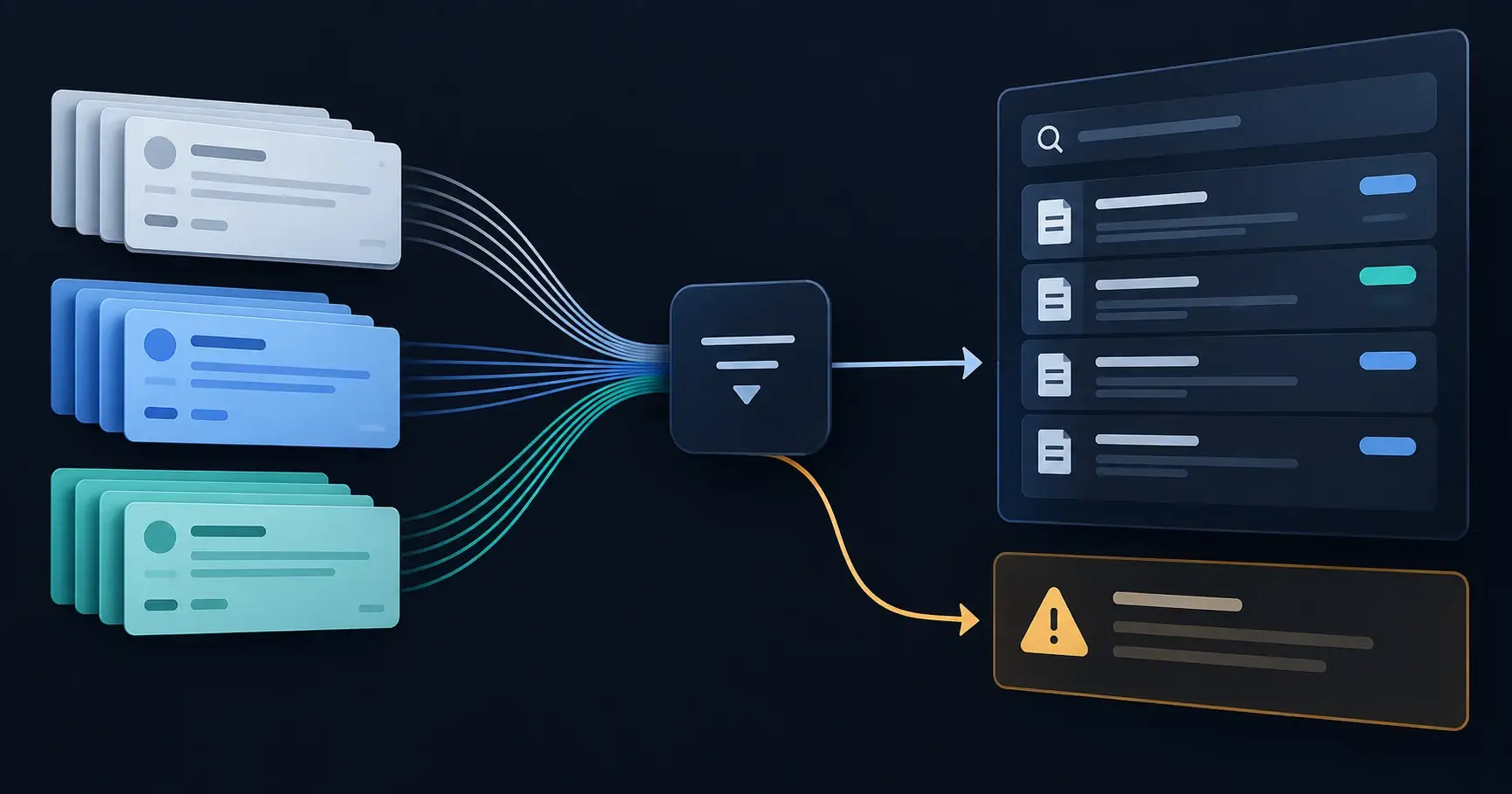
Knowledge Spaces takes a fundamentally different approach. Using retrieval-augmented generation (RAG) and advanced natural language processing, the platform ingests your documents, PDFs, Word files, spreadsheets, presentations, regulatory texts, technical manuals, and builds a semantic understanding of their content. When a user asks a question, Knowledge Spaces doesn’t just search for keyword matches. It understands the intent behind the question, retrieves the most relevant passages from across your entire document library, and synthesizes a clear, referenced answer.
Every answer includes citations pointing back to the source documents, so users can verify the information and dig deeper when needed. This is critical in regulated environments like government and defense, where the provenance of information matters as much as the information itself.
The Architecture Behind Intelligent Retrieval
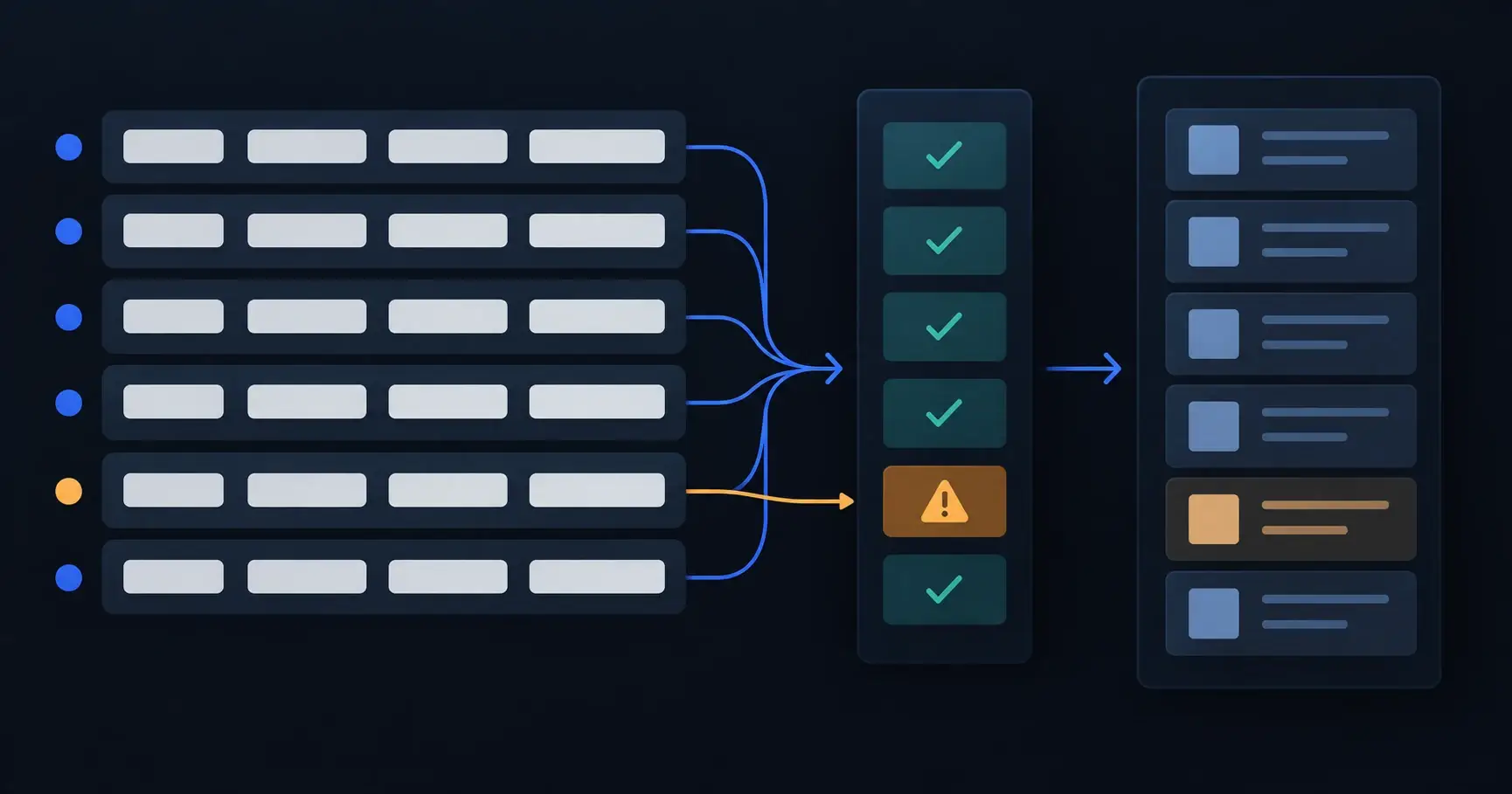
At its core, Knowledge Spaces uses a multi-stage retrieval pipeline. Documents are first processed through specialized parsers that handle everything from complex table structures to embedded images with OCR. The parsed content is then chunked into semantically meaningful segments, not arbitrary blocks of text, but passages that preserve context and meaning.
These chunks are embedded into a high-dimensional vector space using advanced language models. When a query arrives, it’s embedded into the same space, and the system retrieves the most semantically similar chunks. But Knowledge Spaces doesn’t stop at vector similarity. It applies a re-ranking layer that considers factors like document recency, source authority, and contextual relevance to ensure the best information surfaces first.
The final synthesis step uses a large language model to compose a coherent answer from the retrieved passages, while maintaining strict faithfulness to the source material. Knowledge Spaces is designed to never hallucinate, if the answer isn’t in your documents, it tells you so rather than making something up.
Built for Enterprise and Government
Knowledge Spaces was designed from the ground up for enterprise and government use cases. That means security, compliance, and auditability aren’t afterthoughts, they’re core architectural decisions. The platform supports deployment in secure cloud environments, with role-based access controls that ensure users only see answers derived from documents they’re authorized to access.
For government agencies, this matters enormously. A contracting officer researching FAR provisions through Knowledge Spaces will only see answers sourced from documents within their clearance and need-to-know scope. An HR specialist asking about benefits policies will get answers from HR documents, not from engineering specifications. The system respects organizational boundaries while still providing the speed and convenience of a unified knowledge interface.
Sprinklenet’s FARbot is a perfect example of Knowledge Spaces in action. FARbot is a specialized instance of Knowledge Spaces trained on the Federal Acquisition Regulation, providing contracting professionals with instant, accurate answers to complex procurement questions. Instead of spending hours searching through hundreds of FAR parts and subparts, users simply ask their question and receive a precise, cited answer. TimeBridge and Compliance Lab similarly use the Knowledge Spaces architecture for their respective domains.
From Static Documents to Living Knowledge
One of the most transformative aspects of Knowledge Spaces is how it changes the relationship between organizations and their documents. In traditional systems, a document is a static artifact, it sits in a folder until someone happens to need it. In Knowledge Spaces, every document becomes part of an interconnected knowledge fabric. New documents are automatically ingested and integrated, existing knowledge is continuously updated, and the connections between related concepts across different documents emerge naturally.
This has profound implications for institutional memory. When a senior employee retires, their decades of accumulated knowledge doesn’t walk out the door with them if that knowledge has been captured in documents that Knowledge Spaces can process. New employees can get up to speed significantly faster by querying the same knowledge base their predecessors built over years of work.
Getting Started
Organizations interested in deploying Knowledge Spaces typically start with a pilot focused on a specific document collection or use case. This allows teams to experience the value of intelligent knowledge retrieval without the complexity of a full enterprise rollout. Common starting points include regulatory compliance libraries, technical documentation repositories, policy and procedure manuals, and training materials.
Sprinklenet works directly with each client to configure Knowledge Spaces for their specific needs, including custom document processing pipelines, integration with existing systems, and role-based access configurations. To learn more about how Knowledge Spaces can transform your organization’s knowledge management, read our Knowledge Spaces white paper or contact Sprinklenet with the Sprinklenet team.