
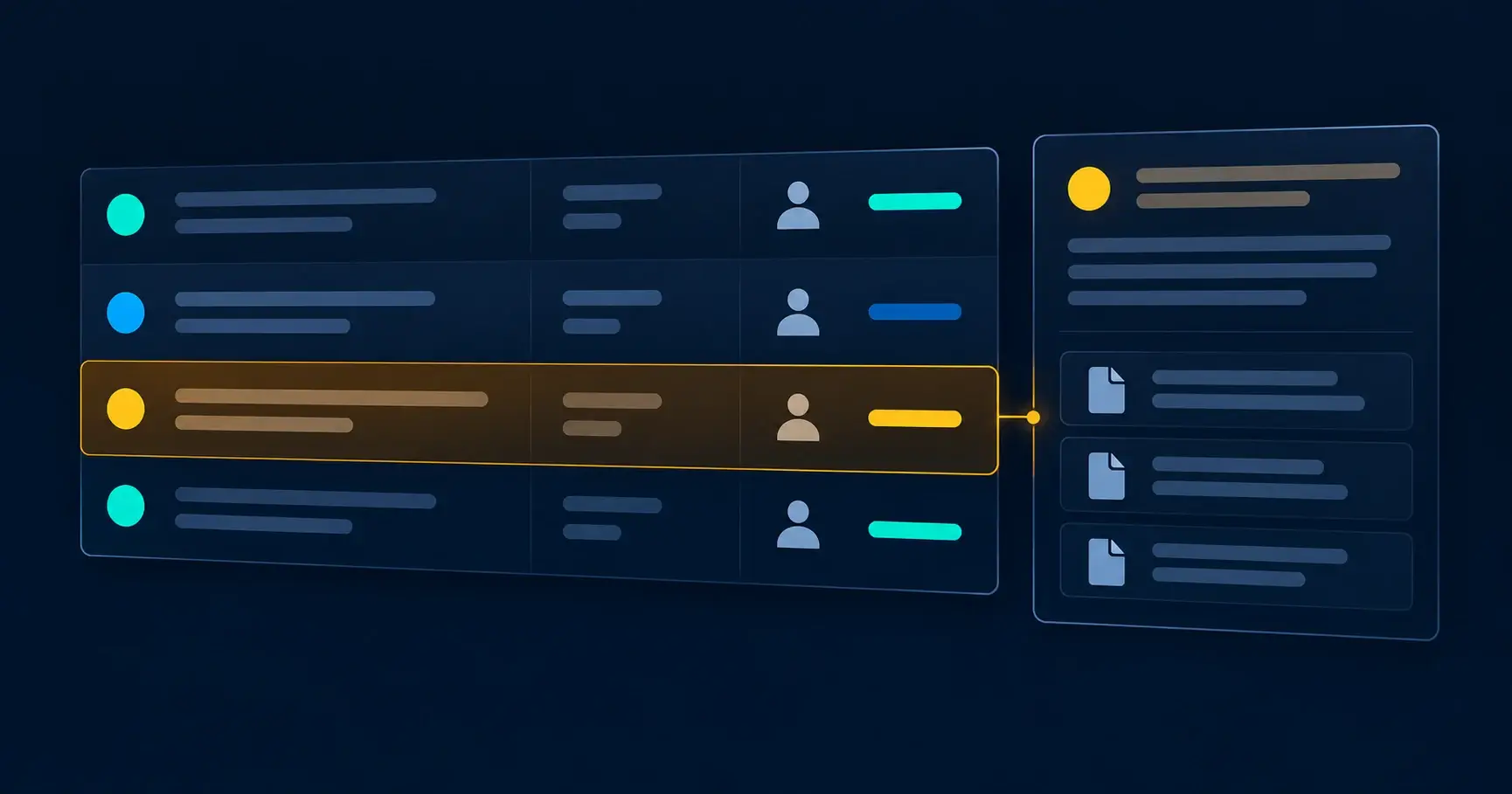
Use one entry per concrete failure scenario. Record the affected workflow, consequence, existing control, evidence, owner, and next review date. A control should not be marked complete solely because it appears in a policy or a backlog.
Write a Specific Failure Scenario
Describe the affected workflow, the trigger, the people or records affected, and the consequence. Use a scenario that can be tested instead of an abstract label such as hallucination risk.
Record Controls and Evidence Separately
List the intended control, whether it is implemented, the test performed, and remaining uncertainty. Keep a documented policy distinct from observed system behavior.
Evidence has a scope. A successful test of a read-only assistant does not establish how the same application behaves after a tool gains permission to change records. Keep the tested action, user role, data set, and configuration with the risk entry. When a proposed change extends that scope, the owner can identify what needs to be tested again. This makes the register useful during delivery: it records why a conclusion was reached and where that conclusion stops, rather than accumulating permanent green labels after isolated tests.
Example: Scenario: a user receives a passage from another department’s restricted file. Record the identity and retrieval checks tested, the result, and any untested paths such as exports.
Assign a Decision and a Responsible Owner
State who accepts, mitigates, transfers, or avoids the risk under the organization’s process. Give unresolved work an owner and review date; define which findings block the particular release.
Update the Register After Changes
Revisit relevant entries after new data sources, tools, users, or models are introduced. Close an item with evidence, and preserve the reasoning for accepted residual risk.
Discuss the implementation scope with Sprinklenet. A useful starting point: a practical risk register for one intended AI workflow.
References
The recommendations above are Sprinklenet’s practical guidance. Technical context: NIST AI Risk Management Framework, OWASP Prompt Injection.