Retrieval Evaluation: What to Measure Before Launch
Separate retrieval failures from answer failures.
 Knowledge Spaces
Applications
Governance
Delivery
Advisory
Industries
Government and Teaming
Company
Contact
Contact
Scope a Six-Week Pilot

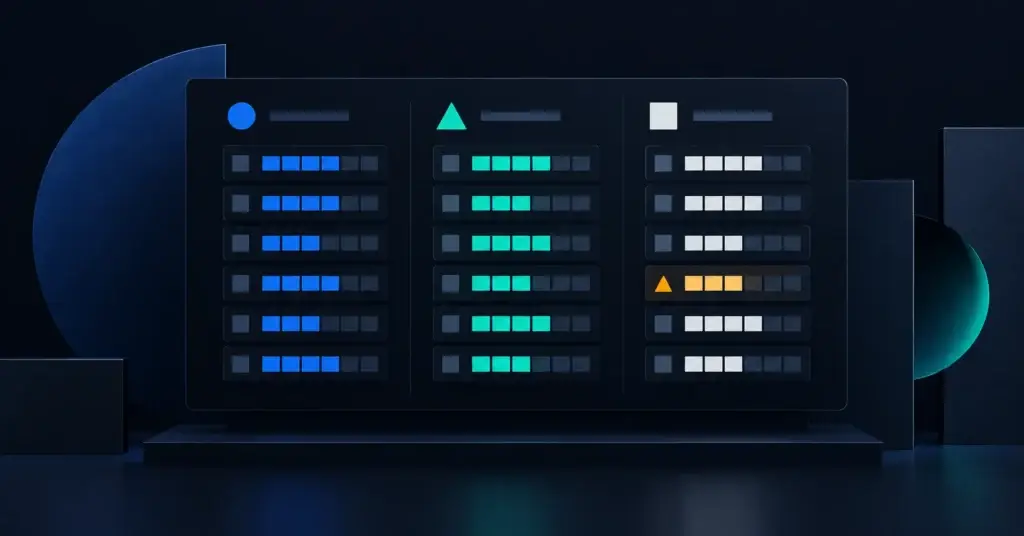
Report a small set of measures with denominators and owners: reviewed systems, overdue controls, task-quality failures, unresolved escalations, and exceptions awaiting a decision. Show the trend and the action required; a rising number of prompts is not itself a governance result.
Report how many systems have owners and reviews, what quality failures occur, and whether work improves. Avoid blending unrelated measures into an unexplained maturity score.
State the population, observation period, exclusions, owner, and data source for each measure. Show newly discovered systems separately so better inventory does not look like deteriorating compliance.
Example: Reviewed systems divided by systems in the current inventory is a coverage measure; it is not the percentage of all AI use that is safe.
List overdue controls, unresolved significant failures, and accepted exceptions with owners and decision dates. Keep critical unresolved items visible even when aggregate trends improve.
The number of open issues does not explain their consequence. A system with several minor documentation gaps may require a different response from one with an unresolved access-control failure. Keep those distinctions visible rather than rewarding a team for closing many easy items while a consequential issue remains open. For each significant exception, show the affected workflow, the decision needed, and what happens if the decision is delayed. This gives executives a basis for assigning resources and accepting or limiting operational use with the remaining uncertainty understood.
Set a response for a threshold or trend and identify who can act. Review metrics alongside changes in workload and reporting coverage before claiming improvement.
Discuss the implementation scope with Sprinklenet. A useful starting point: an executive AI operating scorecard with definitions and accountable decisions.
The recommendations above are Sprinklenet’s practical guidance. Technical context: NIST AI Risk Management Framework, Microsoft RAG Evaluators.

Separate retrieval failures from answer failures.
Due diligence should test architecture, security thinking, production experience, and evidence of delivery.
Use one entry per concrete failure scenario. Record the affected workflow, consequence, existing control, evidence, owner, and next review date.
Most weeks I send one short read on enterprise AI: what’s working in real deployments, what’s not, and what I’d do in your seat.
Jamie Thompson, Founder and CEO