Pre-release testing evaluates a system against a prepared task set. It does not inspect or guarantee every future answer. Define separate runtime review rules for consequential outputs, and use production feedback to update the test set.
Define the Evaluation Boundary
Explain that release testing samples a prepared task set and does not screen every future answer. Separate offline evaluation from runtime checks and human review.
Create Questions With Expected Evidence
For each task, record the relevant source, expected content, material exceptions, and unacceptable outcomes. Include missing answers, conflicting versions, and access-restricted sources.
Keep some evaluation questions separate from the examples used to tune prompts and demonstrations. Otherwise, the team may improve a familiar set without learning how the system handles a differently worded request. Ask a subject-matter reviewer to contribute cases from ordinary work, including incomplete questions and requests with no available answer. Compare the results with the known set and investigate meaningful differences. The purpose is not to surprise the system for its own sake, but to test whether the proposed release supports the task beyond rehearsed examples.
Inspect Retrieval and the Generated Answer
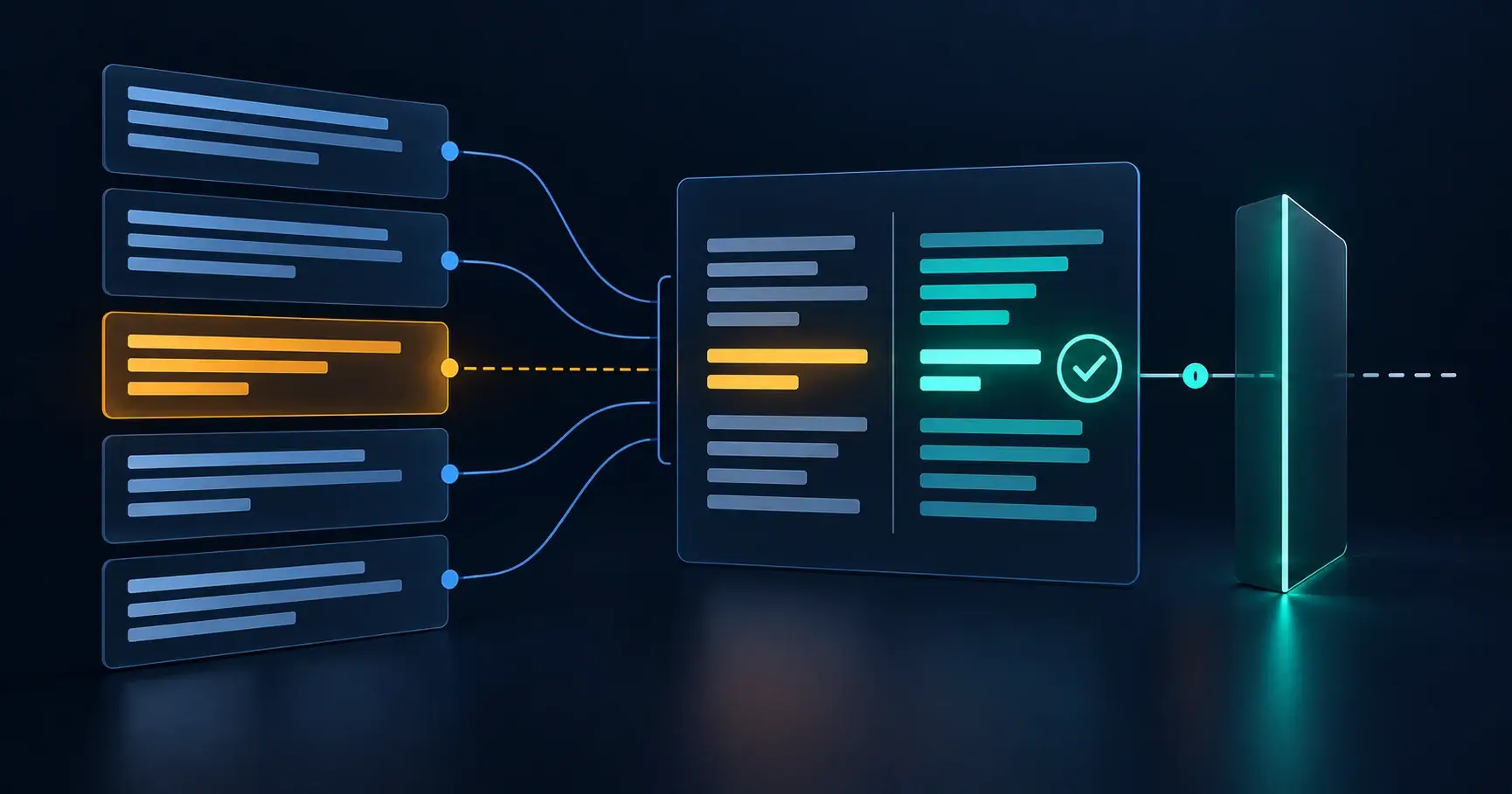
Identify whether the source was found before judging whether the answer used it correctly. Review critical errors separately from averages and sampled automated scores.
Example: A policy exception is in the retrieved passage but absent from the answer. Keep that specific regression case after correcting the prompt or workflow.
Use Evaluation to Make a Release Decision
Agree on task-specific acceptance criteria with the responsible business owner. Assign separate review rules to consequential production outputs and feed real failures back into the test set.
Discuss the implementation scope with Sprinklenet. A useful starting point: a release-evaluation plan and task set for a bounded assistant.
References
The recommendations above are Sprinklenet’s practical guidance. Technical context: Microsoft RAG Evaluators, NIST Generative AI Profile.