
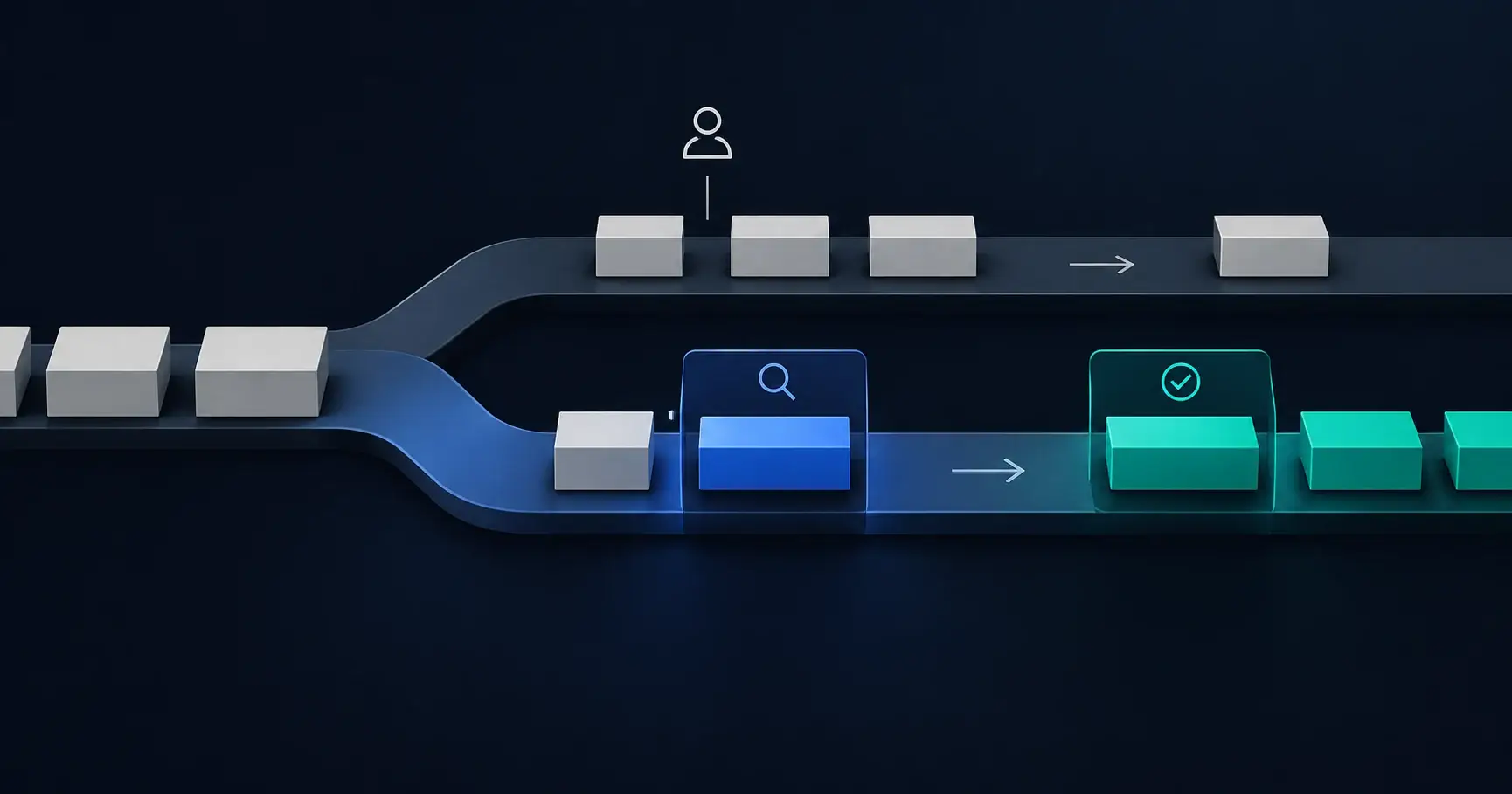
Begin with the tasks users already perform and the decisions they remain responsible for. Run a small pilot with a named support owner, observe review and correction time, and use those observations to change the workflow before expanding access.
Start With the Work Users Must Complete
Observe the current steps, waiting time, corrections, and consequences of a mistake. Identify what the assistant may draft and what the person remains responsible for.
Run a Pilot With Real Review Effort
Have representative users perform the task and record total completion time, including checking and correcting answers. Provide task examples and boundaries rather than generic prompt training.
A pilot can shift work between people without reducing the total effort. For example, an assistant might help an analyst prepare a draft faster while giving a manager more unsupported statements to check. Measure both sides of that handoff. Ask reviewers which parts they trust, which they routinely rewrite, and what evidence would make review easier. This helps distinguish a training problem from a workflow design problem. It also gives the team a practical basis for deciding whether the assistant should draft a complete response or a smaller, easier-to-check component.
Example: For policy lookup, time the search, source reading, answer correction, and escalation together.
Give Users a Correction Path
Provide a visible way to flag an unsupported answer or outdated source. Assign a named owner who closes the loop and explains the resolution.
Decide Whether the Workflow Deserves Expansion
Compare repeat use with successful completion, rework, escalation, and satisfaction. Change the process when review burden removes the expected benefit; avoid treating logins as business value.
Discuss the implementation scope with Sprinklenet. A useful starting point: a pilot design that measures task completion and user review effort.
References
The recommendations above are Sprinklenet’s practical guidance. Technical context: NIST AI Risk Management Framework.