AI Change Management for Knowledge Workers
Begin with the tasks users already perform and the decisions they remain responsible for.
 Knowledge Spaces
Applications
Governance
Delivery
Advisory
Industries
Government and Teaming
Company
Contact
Contact
Scope a Six-Week Pilot
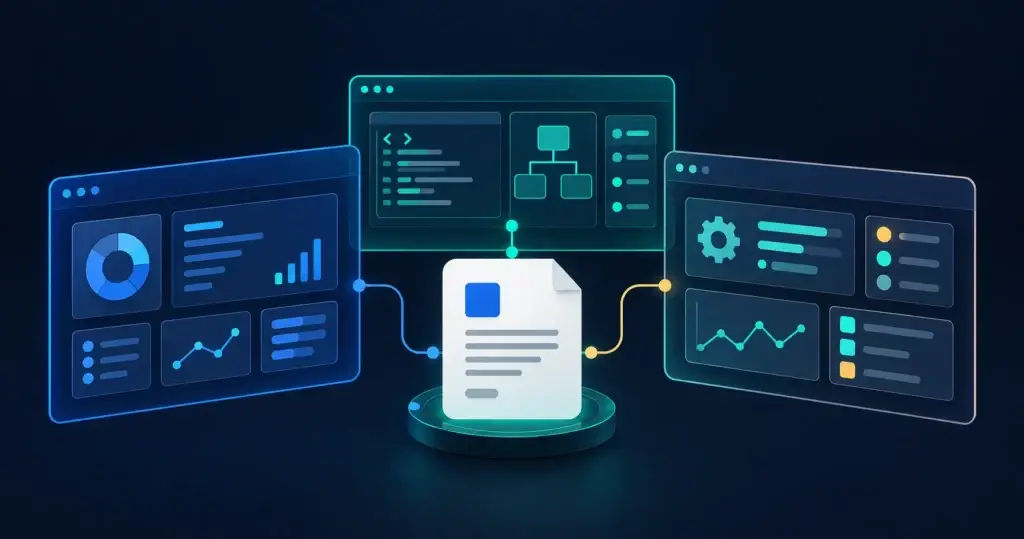
Assign responsibility at the points where work changes hands: source approval, access changes, answer review, incident response, and release. The business owner accepts the task outcome; engineering and security owners provide evidence about system behavior and controls.
Identify who owns the source, task outcome, access decision, implementation, and support. Find handoffs where a decision currently has no accountable owner.
Make the business owner responsible for accepting task results. Have content, engineering, and security owners provide evidence within their responsibilities.
Make competing requirements explicit and record the agreed tradeoff. Test the resulting decision with representative users.
Example: The business team wants all policies searchable; the content owner identifies superseded documents and security identifies a restricted appendix. Decide which sources are served to which users before expanding access.
Define how source corrections, access changes, incidents, and releases reach the right owner. Review unresolved cross-team issues in the operating cadence rather than leaving them as chat messages.
Routine changes can cross several teams even after the initial project closes. Suppose a policy owner withdraws a document while an operations team maintains the search index and a support team handles user complaints. Unless the withdrawal has a defined notification and verification path, each team may complete its own task while users still receive the old guidance. Assign responsibility for confirming the final user-visible result. That closes the handoff and gives everyone a shared completion condition instead of relying on separate departmental status updates.
Discuss the implementation scope with Sprinklenet. A useful starting point: a responsibility and decision map for a cross-functional AI workflow.
The recommendations above are Sprinklenet’s practical guidance. Technical context: NIST AI Risk Management Framework.

Begin with the tasks users already perform and the decisions they remain responsible for.
Due diligence should test architecture, security thinking, production experience, and evidence of delivery.
Every vendor claims agentic AI. What it is, where it creates measurable value, and how to adopt it without the missteps that derail most…
Most weeks I send one short read on enterprise AI: what’s working in real deployments, what’s not, and what I’d do in your seat.
Jamie Thompson, Founder and CEO