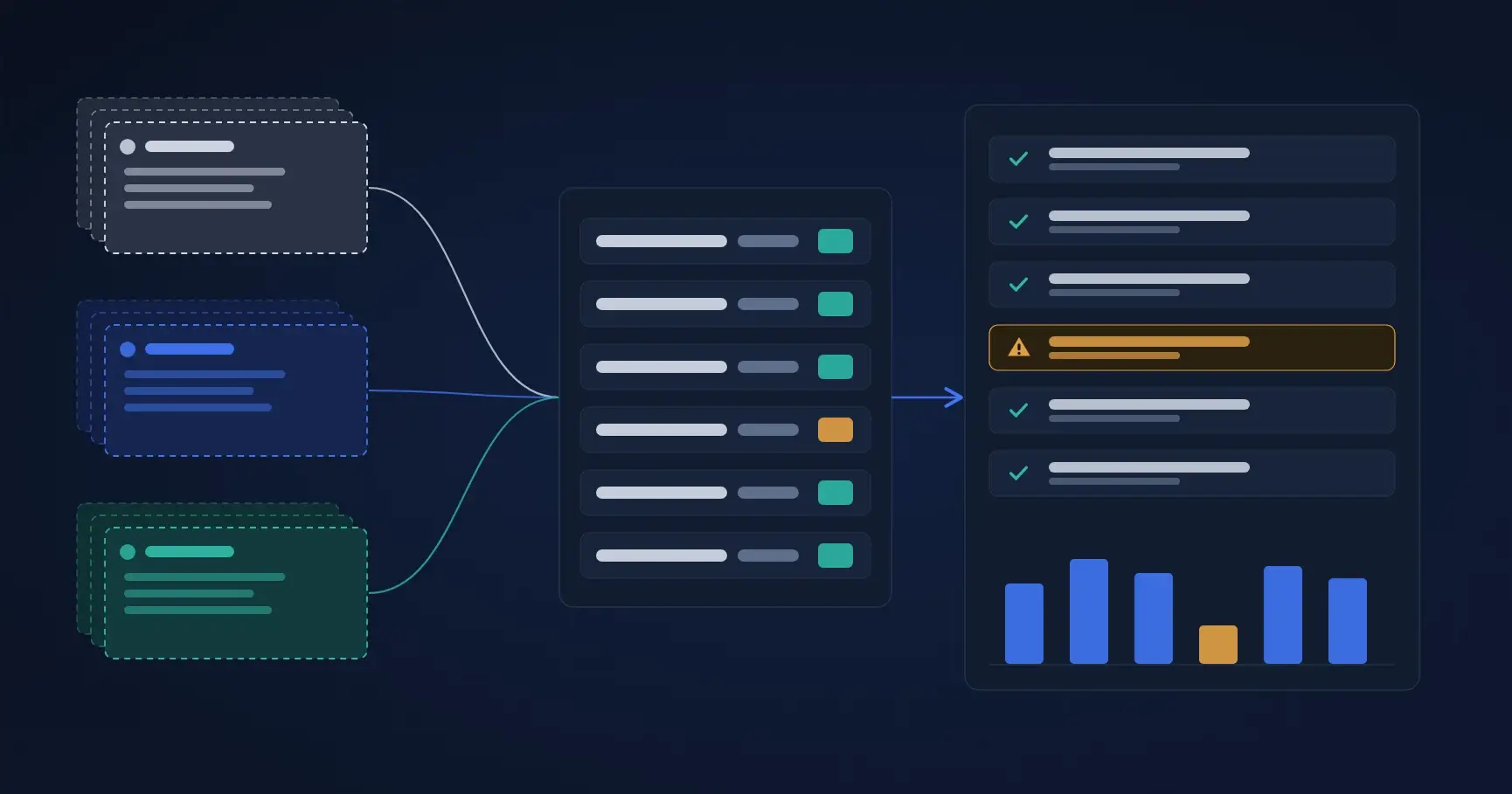

Use an operating dashboard that connects service health to task quality. Track failed imports, response latency, cost per completed task, citation support, and unresolved escalations. Define an owner and response threshold for each measure, and minimize sensitive content in logs.
Connect Service Health to the User Task
Track imports, retrieval failures, latency, task completion, and unresolved escalations. Give every metric an owner and a decision or response it supports.
Measure Failures That Infrastructure Charts Miss
Sample answer support and completeness using representative tasks. Keep failed retrieval, unsupported generation, and outdated source content distinguishable.
Example: A service can return fast responses with successful HTTP status codes while citing a superseded policy. Latency and HTTP success rates would miss the problem.
Set Diagnostic Data Boundaries
Collect the smallest useful diagnostic record and control access to it. Decide explicitly whether any prompt or response content is retained, redacted, sampled, or excluded.
Use Thresholds to Trigger Work
Define escalation thresholds for failures and spending, plus who investigates them. Review trends alongside changes in traffic, models, prompts, and source collections before inferring improvement.
A dashboard can improve because the workload became easier, even when the system did not. If users stop asking complex questions after poor experiences, average response time and completion figures may look better while useful adoption declines. Review measures by task type and configuration version, and include failures that led users to seek help elsewhere. The operating decision should be specific: investigate a source, change a workflow, adjust capacity, or revise a release. A chart without an intended response is unlikely to help an executive allocate attention.
Discuss the implementation scope with Sprinklenet. A useful starting point: an operating dashboard and incident-response design tied to a specific AI workflow.
References
The recommendations above are Sprinklenet’s practical guidance. Technical context: OpenTelemetry Sensitive Data Handling, Microsoft RAG Evaluators.