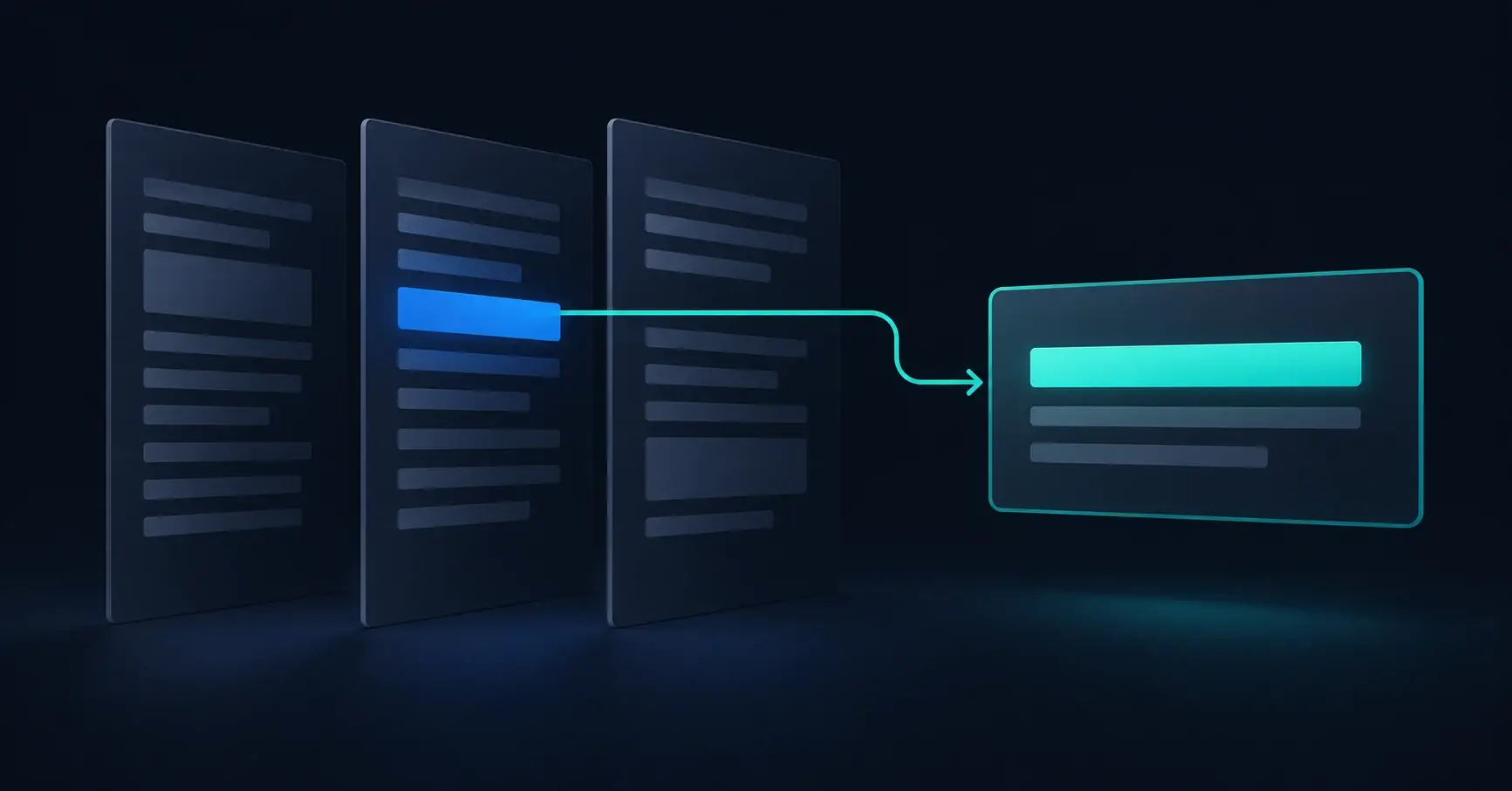
A citation should let the reader inspect the passage that supports a claim. Preserve a source identifier, version, and passage location through retrieval, then test whether the answer follows that evidence. A working link alone does not establish support.
Preserve Source Identity Through the Pipeline
Keep a stable document identifier, version or effective date, and a passage location with retrieved content. Retain enough provenance to locate the original record after a reindex.
Check Whether Each Citation Supports the Claim
Inspect the cited passage against the exact statement, including qualifications and exceptions. Treat a working URL and a plausible document title as insufficient evidence.
Some answers combine evidence from several documents. That creates a separate review problem: each source may support an individual fact without supporting the conclusion drawn from them. Imagine an answer combining a purchasing policy with a department’s internal procedure. The system should make clear which statements come from each document and which connection is an interpretation. If the sources conflict or their relationship is uncertain, attaching both links does not resolve the question. The reader needs that uncertainty stated before acting on the combined answer.
Example: An answer states that all purchases need approval, but the cited policy contains a small-purchase exception. The citation is real; the answer is still incomplete.
Handle Missing and Conflicting Evidence
Make the interface distinguish supported answers, conflicting sources, and questions the collection cannot answer. Route unresolved policy interpretation to the responsible person instead of filling the gap.
Test Citations as a User Would
Open the source as the requesting user and verify access and passage location. Include source updates, revoked access, and removed files in regression cases.
Discuss the implementation scope with Sprinklenet. A useful starting point: a citation-quality and source-provenance review of one assistant workflow.
References
The recommendations above are Sprinklenet’s practical guidance. Technical context: Microsoft RAG Evaluators, Microsoft Document Chunking Guidance.